Olympic Games · Careers
How to become an Olympian from Nigeria
From school sports to Team Nigeria: how Olympic qualification really works, the grants and rules that matter, and careers around the Games.
Advertisement
Olympic careers
Your road to the Olympic Games
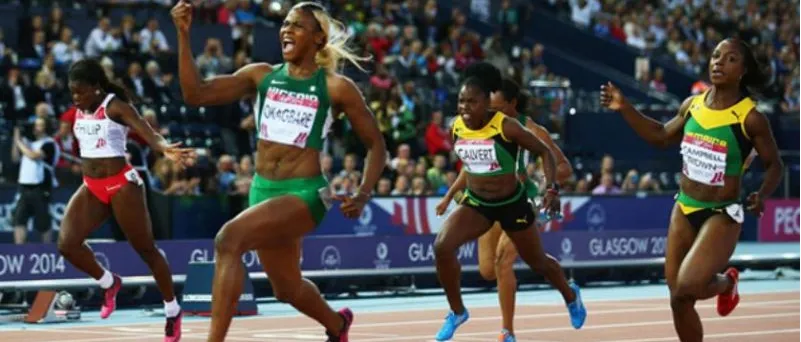
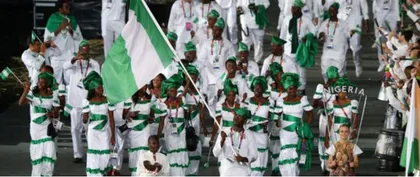
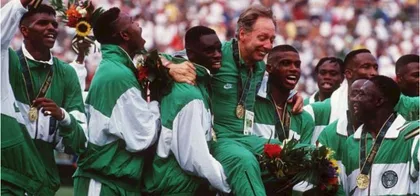
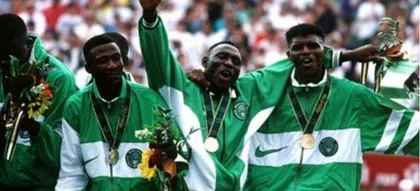
Nigeria has won 27 Olympic medals since its first Games in Helsinki in 1952: three gold, eleven silver and thirteen bronze. Behind every one of them is a young Nigerian who was once spotted at school sports, a state trial or a local gym, and who then learnt how the Olympic system really works. This page explains that system, in plain words.
It is written for young athletes, parents, PE teachers and coaches who dream of the Olympics. It covers how qualification works, who enters you for the Games, the scholarships and grants that exist, the anti-doping rules every Olympian must live by, and the many Olympic careers that do not need a medal. Every fact was checked on 1 October 2026.
One honest truth first: you never qualify for the Olympics through Nigeria alone. You qualify through your sport. Each international federation sets its own route, and the Nigeria Olympic Committee (NOC) can only enter athletes who have earned a place through that route. So the first question is always: which sport, and what is its qualification system?
Career facts · Checked 1 October 2026
Nigeria's Olympic road in numbers
-
27
Olympic medals
3 gold, 11 silver and 13 bronze since 1952.
-
88
Athletes at Paris 2024
Nigeria's largest team: 25 men and 63 women.
-
4
Youth Olympic medals
Won by Nigeria at Buenos Aires 2018.
-
14 July
LA28 opens
The Olympic Games run from 14 to 30 July 2028.
The pathway at a glance
Six stages from school sports to the Olympics
Ages are a guide. Every sport has its own route, so check yours early.
Age 8 to 14
School sports and first clubs
Most Nigerian Olympians were found at school. Blessing Oborududu was discovered in her secondary school in Amarata, Yenagoa, by the Bayelsa State Sports Council.
Age 12 to 18
State teams and youth games
State sports councils, the National Youth Games and school championships. Abuja hosts the African School Games from 2 to 11 August 2027.
Age 15 to 18
Youth Olympic Games
The Youth Olympics for teenage athletes. Nigeria won four medals at Buenos Aires 2018; Dakar 2026 runs from 31 October to 13 November.
Age 17 to 23
National federation and African level
National championships, then African Games and African championships. Results here build world rankings.
Age 18 and up
Earn a quota place
Through your international federation: qualifying marks, rankings, world or continental qualifiers, or a universality place.
Olympic year
Selection and entry by the NOC
The NOC enters qualified athletes for Team Nigeria. Los Angeles 2028 runs from 14 to 30 July 2028.
Step by step
Eight steps to the Olympic Games
Follow these in order. The Olympics reward years of patient, clean work.
Choose an Olympic sport and learn its route
The Olympic Games are not one competition but dozens of sports, each run by its own international federation. Those federations write the qualification systems: some give places to named athletes, others give them to the National Olympic Committee, which then picks its team through national trials. Find your sport's federation in Nigeria and ask for its Los Angeles 2028 qualification rules. Some routes have already started: in shooting, the LA28 qualification period runs from 31 July 2026 to 1 May 2028.
Nigeria's medals tell you where the country has a tradition: athletics (14), boxing (6), football (3), weightlifting (2), and taekwondo and wrestling (one each). But new doors are opening too. LA28 adds cricket, flag football, lacrosse and squash, brings back baseball and softball, and adds new 50 m swimming events and beach sprint rowing.
Get spotted at school and state level
Olympic careers in Nigeria almost always start with a teacher or a state sports council. Blessing Oborududu, who won wrestling silver at Tokyo 2020, told the Daily Trust she started in 2006 after being discovered at her secondary school in Yenagoa by the Bayelsa State Sports Council. Take part in inter-house sports, school championships and your state trials. Ask your state sports council which sports it is building teams for.
Train with a qualified coach in a registered club
A registered club and a qualified coach give you a training plan, a competition record and a link to your national federation. Without that link, nobody can enter you for the trials that lead to Team Nigeria. Ask any coach which federation they are registered with, and keep copies of every result you achieve.
Compete at youth level, including the Youth Olympics
The Youth Olympic Games are the Olympic stage for teenagers. At Buenos Aires 2018 Nigeria sent 17 athletes in eight sports and won four medals: gold in the girls' 100 m, and silvers in the boys' 100 m, the boys' triple jump and girls' judo. The next edition, Dakar 2026 in Senegal, runs from 31 October to 13 November 2026 with 25 sports. It is the first IOC event ever held in Africa.
Earn your place through rankings, marks or qualifiers
Each sport uses its own mix of methods: qualifying standards, world rankings, world championships and continental qualifiers. In swimming, LA28 qualification starts on 1 March 2027, with the World Aquatics Championships in Budapest (26 June to 18 July 2027) as a key event. Some nations with very few qualified athletes can also receive a universality place. At Paris 2024 Nigerian swimmers Tobi Sijuade and Adaku Nwandu raced this way without meeting the standard entry mark.
Make sure you are entered, on time
Even a qualified athlete can miss the Games if the paperwork fails. At Paris 2024 sprinter Favour Ofili was left out of the women's 100 m because she was not registered for it. In June 2025 a ministerial panel found the Athletics Federation of Nigeria's secretary-general negligent, and recommended that the federation pay Ofili ₦8 million in compensation. Ask your federation, in writing, to confirm every event it has entered you for.
Train clean from day one
Olympic careers end in a single positive test. At Paris 2024 Nigerian boxer Cynthia Ogunsemilore was disqualified after failing a drug test. Nigeria now has a 2025 National Anti-Doping Act and a Nigeria Anti-Doping Centre. Read the anti-doping section below before your first international competition.
Plan your second career while you compete
Very few Olympians earn a full living from sport, and every career ends. The IOC's Athlete365 Career+ programme, an initiative of the IOC Athletes' Commission, offers career planning, skills building, employment support and networking, and says it has supported more than 59,000 athletes since 2005. Keep studying, and look at the careers around the Games in the section below.
Advertisement
The system
How Olympic qualification works
This is the part most young Nigerians never get explained. Here is how an athlete actually gets to the Olympics.
Who decides?
- The international federation of each sport (for example World Athletics, World Aquatics or World Boxing) writes the qualification system and runs the qualifying events.
- The quota place may be given to the named athlete who earned it, or to the National Olympic Committee, which then chooses who fills it through its own selection process.
- The Nigeria Olympic Committee enters the qualified athletes for the Games. It was founded on 26 May 1951; its president is Habu Gumel and its secretary-general Tunde Popoola.
- Your national federation runs the trials, rankings and paperwork that connect you to all of the above.
Key dates for Los Angeles 2028
| Date | What happens |
|---|---|
| 31 October to 13 November 2026 | Youth Olympic Games, Dakar, Senegal (25 sports) |
| 31 July 2026 to 1 May 2028 | Example: the LA28 shooting qualification period |
| 1 March 2027 | LA28 swimming qualification opens |
| 2 to 11 August 2027 | African School Games, Abuja |
| 14 to 30 July 2028 | Olympic Games, Los Angeles |
| 15 to 27 August 2028 | Paralympic Games, Los Angeles |
Paris 2024 shows both the size of the opportunity and the size of the challenge. Nigeria sent 88 athletes (25 men and 63 women) in 12 sports, its largest team, but came home without a medal for the first time since London 2012.
Funding
Grants, scholarships and making a living
There is no salary for being an Olympian. Athletes live on grants, scholarships, sponsors, prize money in their own sport, and jobs. These are the support programmes we could verify.
| Support | What we could verify | Who it is for |
|---|---|---|
| NSC training grants | Over ₦200 million shared by 26 athletes in February 2026, chosen by the NSC's Elite and Podium Board | Medal prospects; this round covered weightlifting, athletics, taekwondo and para sports |
| ANOCA athlete programme | $2 million for LA2028 scholarships, from March 2026: training, coaching, medical care, insurance, accommodation, allowances and partial travel | Elite African athletes; priority to athletics, boxing, judo, swimming, taekwondo, weightlifting and wrestling |
| Olympic Solidarity scholarships | $1,500 a month per athlete, up to six athletes per NOC, from 1 September 2025 to 31 August 2028 | Only NOCs that had 50 or fewer athletes in individual sports at Paris 2024 |
| Prize money in your sport | Depends entirely on the sport; see our athletics career page for World Championship prize money | Athletes who win at world level |
What this means for you: funding follows results. Build a record at national and African level, ask your federation how athletes are nominated for NSC and ANOCA support, and keep your education going so that you are never dependent on one grant.
Stay clean
Anti-doping: the rules every Olympian lives by
Every Olympic athlete is subject to the World Anti-Doping Code, in and out of competition. Nigeria has strengthened its own rules:
- President Tinubu signed the National Anti-Doping Act in 2025. It creates the Nigeria Anti-Doping Centre (NADC), an independent body to implement the World Anti-Doping Code.
- Nigeria is expected to carry out at least 1,500 tests a year, and the government has backed plans for an accredited anti-doping laboratory in Nigeria.
- The NADC's Technical Board was inaugurated on 3 July 2026, with a promise to take anti-doping education to grassroots sport, schools, community clubs and academies.
- Athletes in testing pools must keep their whereabouts up to date. Our athletics career page explains the rules in detail.
Five rules that protect your Olympic dream
- Check every medicine and supplement before you take it, and keep the receipt.
- Tell every doctor and pharmacist that you are a tested athlete.
- Never accept a “special” drink, injection or pill from a coach, friend or stranger.
- Read every entry list and selection letter, and ask questions early.
- Keep copies of your results, your registration and your correspondence with your federation.
Beyond competing
Careers around the Olympic Games
Only a few hundred Nigerians have ever competed at the Olympics, but thousands more build careers around them. These paths are open in Nigeria:
| Career | How to start | Where it can lead |
|---|---|---|
| Coach | Start with your sport's federation coaching courses. For athletics, the AFN runs World Athletics Level I courses. | State, national and Olympic team coaching |
| Technical official | Every Olympic sport needs referees, judges and timekeepers. Ask your national federation about its next officials' course. | National and international panels |
| Sports medicine | Study medicine, physiotherapy or sports science; physiotherapists register with the Medical Rehabilitation Therapists Board of Nigeria. | Federation, NOC and Games medical teams |
| Administrator | Volunteer at your club, state association or sports council and study sports management. | Federation, NSC and NOC roles |
| Athlete leader | Join your federation's athletes' commission when you compete. | NOC and IOC athletes' commissions |
Former athletes often move into these roles. Chioma Ajunwa, Nigeria's first individual Olympic champion, joined the Nigeria Police Force and set up her own foundation for young athletes. Read her story on our Chioma Ajunwa page.
Women in sport
Girls and women at the Olympics
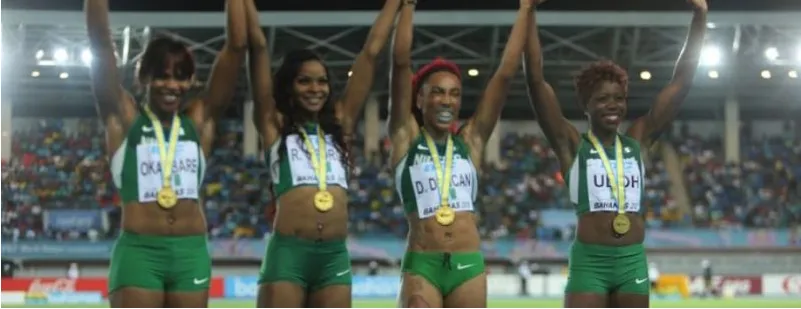
Nigerian women have carried the Olympic flag for decades. Chioma Ajunwa won long jump gold in 1996, Blessing Oborududu won Nigeria's first Olympic wrestling medal at Tokyo 2020, and Ese Brume took long jump bronze at the same Games. At Paris 2024, 63 of Nigeria's 88 athletes were women.
Los Angeles 2028 will be the first Olympic Games with more female than male athletes. That is good news for Nigerian girls, but family support still matters. Oborududu told the Daily Trust that her brother stopped her from training because he believed wrestling was for men. Talk to your family early, introduce them to your coach, and show them the education and scholarship routes.
Advice from the stars
What Nigerian Olympians and officials want you to know
Every quote below was checked word for word against the outlet named under it. We add one practical lesson to each.
If they have a dream, they should stick to it. They must pursue it with all amount of zeal.
Blessing OborududuTokyo 2020 Olympic wrestling silver medallist
Daily Trust Saturday, 11 September 2021The lesson: Write your Olympic goal down and train for it every day.
Athletes shouldn't be getting punished for things out of their control.
Favour OfiliOlympic sprinter, left out of the Paris 2024 100 m
Pulse Sports, 2 August 2024The lesson: Check your own entries in writing: it is your career on the line.
When we take care of our athletes, they will take care of the country by winning medals.
Bukola OlopadeDirector General, National Sports Commission
Sports247, 10 February 2026The lesson: Ask your federation how athletes are nominated for NSC grants.
Our athletes must remain clean and free from banned substances at all times.
Shehu DikkoChairman, National Sports Commission, on the Anti-Doping Act
Sports247, 2025The lesson: Clean sport is not optional for an Olympian.
Your first move
Where to start this week
Wherever you are on the road, you can start this week:
- Tell your PE teacher or state sports council which Olympic sport you want to try.
- Join a registered club and ask your coach which federation you are registered with.
- Look up your sport's LA28 qualification system and write down the key dates.
- Keep a folder with your birth certificate, results and any selection letters.
- Learn the basics of clean sport before your first national competition.
- Keep up your studies: they open scholarship doors and protect your future.
- Parents and coaches: contact the Nigeria Olympic Committee or your sport's federation for official programmes.
The NOC's address and contacts are on our Contact the Nigeria Olympic Committee page. For sport-specific advice, read our athletics, basketball and football career pages, and follow Nigerian athletes every week in our African Sports News.
Keep exploring
Explore Nigeria at the Olympics
Quick answers
Olympic careers in Nigeria: your questions
How do I qualify for the Olympics from Nigeria?
Through your sport's international federation. Each federation sets a qualification system based on qualifying marks, world rankings, world or continental qualifiers, or universality places. The Nigeria Olympic Committee then enters the qualified athletes for the Games.
Does the Nigeria Olympic Committee pick the team?
The NOC enters Team Nigeria, but athletes must first earn a quota place through their sport. In some sports the place belongs to the named athlete, in others to the NOC, which fills it through national trials and selection by the federation.
When are the next Olympic Games?
Los Angeles 2028 runs from 14 to 30 July 2028, followed by the Paralympic Games from 15 to 27 August 2028. The Youth Olympic Games take place in Dakar, Senegal, from 31 October to 13 November 2026.
Are there scholarships for Nigerian Olympic hopefuls?
ANOCA has a $2 million LA2028 programme for elite African athletes, with priority to athletics, boxing, judo, swimming, taekwondo, weightlifting and wrestling. The National Sports Commission also gives training grants, such as over ₦200 million to 26 athletes in February 2026.
What new sports will be at LA 2028?
Cricket, flag football, lacrosse and squash join the programme, baseball and softball return, and there are new 50 m backstroke, breaststroke and butterfly swimming events and beach sprint rowing.
What anti-doping rules apply to Nigerian athletes?
The World Anti-Doping Code, enforced in Nigeria by the Nigeria Anti-Doping Centre under the National Anti-Doping Act signed in 2025. Athletes are responsible for everything they take, and athletes in testing pools must keep their whereabouts updated.
Which sports have won Nigeria the most Olympic medals?
Athletics, with 14 of Nigeria's 27 medals, followed by boxing with 6, football with 3, weightlifting with 2, and taekwondo and wrestling with one each.