Football · Careers
How to build a football career in Nigeria
From school fields to the Super Eagles and Super Falcons: every step, the rules that protect you, what players earn and advice from Nigerian stars.

Advertisement
Careers in football
Your road to professional football
Every Saturday, on school fields, church compounds and dusty streets from Kano to Calabar, thousands of Nigerian children kick a ball and dream of the Super Eagles or the Super Falcons. A few will make it. Many more could, if they knew the road. This page is that road map.
It is written for young players, parents, teachers and grassroots coaches. It explains each stage from school football to a professional contract, the rules that protect young players, what footballers really earn, the scams that destroy dreams, and the many careers in football that do not need you to score goals. Every figure was checked on 1 October 2026 and the advice comes from Nigerians who have walked the road.
One honest truth before you start: very few players become professionals, and nobody can promise you a contract. Anyone who does is a warning sign. What you can control is your training, your education, your discipline and the people you trust.
Career facts · Checked 1 October 2026
Nigerian football careers in numbers
-
5
U-17 World Cups won
The Golden Eaglets' world record: 1985, 1993, 2007, 2013 and 2015.
-
18
Minimum age to move abroad
FIFA Article 19, apart from five narrow exceptions.
-
₦2m
NPFL monthly minimum
Announced for the 2026/27 season by the NSC and NFF.
-
10
WAFCON titles
Super Falcons, the most in Africa, the latest in 2025.
The pathway at a glance
Six stages from grassroots to professional
Ages are a guide, not a rule. Some players arrive late; many great careers started in school football.
Age 6 to 12
School and street football
Play as often as you can, in school teams, inter-house sports and local clubs. Learn to love the ball with both feet.
Age 10 to 16
Join a registered academy or club
A coached academy gives structure and a record of your games. The NFF registers players from age 10 through State FAs.
Age 13 to 17
State and zonal tournaments
Governor's Cups, school championships and zonal screenings are where national youth coaches look.
Age 15 to 20
Youth national teams
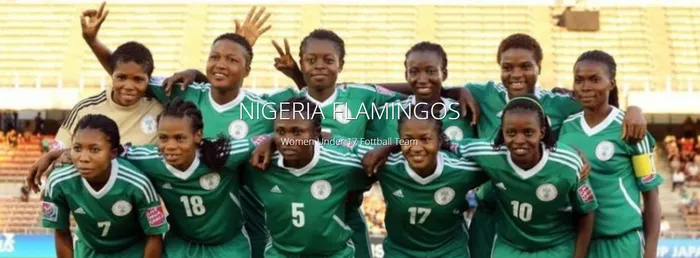
Golden Eaglets and Flamingos (under 17), Flying Eagles and Falconets (under 20). An MRI wrist test is compulsory at under 17.
Age 17 and up
Domestic league contract
NNL, NPFL or NWFL clubs. A ₦2 million monthly minimum wage was announced for the NPFL from 2026/27.
Age 18 and up
Move abroad, the legal way
FIFA allows international transfers only from age 18, with five narrow exceptions. A licensed agent and a real club offer come first.
Step by step
Eight steps to a football career
Follow these in order. Each step builds on the one before it.
Fall in love with the ball, and stay in school
The best Nigerian players started young and played constantly. But do not drop out of school to chase football. Asisat Oshoala, the most decorated African women's player of her generation, says she does not want to preach leaving education for sport. School keeps a door open if injury or luck goes against you, and many scholarships abroad need good grades.
- Play at least three or four times a week, with both feet, in different positions.
- Take part in inter-house sports and school teams: teachers are often the first scouts.
Find a coached, registered academy
Street football builds skill; a good academy builds a player. Nigeria has academies with real records:
- Pepsi Football Academy (founded 1992): ages 6 to 18, 14 centres nationwide. Alumni include Mikel John Obi.
- FC Ebedei, Sagamu: the African academy of Danish club FC Midtjylland. Alumni include Paul Onuachu, Frank Onyeka and Raphael Onyedika.
- Beyond Limits Football Academy (2016): the Remo Stars academy, which has moved players to clubs in Europe.
- 36 Lion FC, Lagos (2000): alumni include Imoh Ezekiel.
Before you join any academy, visit it, watch a session, ask which players it has produced and confirm it is registered with your State Football Association.
Get registered and protect your age record
The NFF uses FIFA Connect to register players from schools, academies and clubs through the State FAs, so each player has one record for life. Keep your real birth certificate safe. Never let anyone change your age. Age cheating can end a career: CAF scans the wrist bone at under-17 level, and a fully fused growth plate makes a player ineligible.
Stand out where the scouts are watching
National youth coaches pick players from clubs, academies and tournaments. In August 2026 the Golden Eaglets coach invited 62 players from clubs and academies to camp in Abuja. State competitions such as the Bayelsa Governor's Cup have sent players straight to zonal screenings.
- Play in your State FA youth leagues and school championships.
- Ask your coach to keep video of your best games.
- Be the most disciplined player at every screening: punctual, fit and coachable.
Earn a youth national team call-up
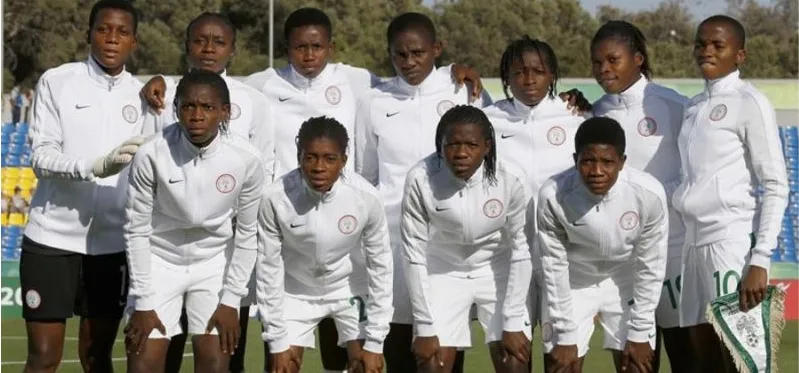
Nigeria's youth teams have the richest record in Africa. The Golden Eaglets have won the FIFA U-17 World Cup five times (1985, 1993, 2007, 2013, 2015), a world record. The Flying Eagles were U-20 World Cup runners-up in 1989 and 2005. For girls, the Flamingos finished third at the 2022 U-17 Women's World Cup and the Falconets have played at every U-20 Women's World Cup since 2002. A good tournament here is seen by clubs all over the world.
Sign your first contract at home
The Nigeria Premier Football League (NPFL) has 20 clubs; the Nigeria National League (NNL) has 36 clubs in four conferences, with four promoted each season. Women play in the NWFL Premiership, Championship and Nationwide League. Read every contract before you sign, ideally with a lawyer or a parent, and keep a copy.
Go abroad only through the legal door
FIFA's rules say international transfers are only allowed once a player is over 18, apart from five narrow exceptions. A legitimate move comes with a written offer from a real club, a licensed agent and a proper work visa. See the section on going abroad below.
Build a career that lasts after football
Most playing careers end in the early or mid thirties. Save, invest carefully and keep learning. John Obi Mikel has warned that when a footballer makes money, family demands quickly follow. Coaching badges, a degree or a trade will give you a second career.
Advertisement
Abroad
Going abroad: the rules that protect you
Thousands of young Nigerians dream of Europe. Here is what the rules actually say, so nobody can fool you.
FIFA Article 19: the age rule
FIFA's regulations state that international transfers are only permitted if the player is over the age of 18. There are five exceptions:
- The player's parents move to the club's country for reasons not linked to football.
- Transfers within the European Union or European Economic Area for players aged 16 to 18, with schooling and proper living conditions provided.
- Players who live within 50km of a border, joining a club within 50km of the same border, no more than 100km apart, while still living at home.
- Refugees and other protected persons, under strict conditions.
- Students on a temporary academic exchange, at amateur clubs only, for up to one year.
In plain words: a 15-year-old from Nigeria cannot legally sign for a European club just because an "agent" arranged a trip.
FIFA licensed agents
Since 1 October 2023 every football agent must hold a FIFA licence, which means passing an exam. Agents cannot approach a minor until six months before the age the player can first sign a professional contract, and a minor's representation agreement must be signed by a parent or guardian. FIFA publishes a public directory of licensed agents: check the name before you trust anyone.
Scholarships: the education route
For girls especially, a US university scholarship can be a powerful route. Deborah Abiodun, born in Ibadan, went from Rivers Angels in the NWFL to the Falconets and Super Falcons, took a full scholarship at the University of Pittsburgh, then joined Washington Spirit in the American NWSL in 2025. College scholarships need good school grades, so step one still applies.
Pay
Making a living from football
Footballers' pay in Nigeria varies enormously, and much of what you hear is rumour. These are the verified figures.
| Level | What we could verify | Source |
|---|---|---|
| NPFL minimum wage | ₦2 million a month from the 2026/27 season, set by the National Sports Commission and the NFF on 25 June 2026 | Blueprint |
| Reality check | Clubs have often failed to pay agreed wages; an earlier ₦150,000 minimum was not honoured everywhere | Daily Trust, June 2026 |
| Super Falcons team prize | $150,000 to the team for reaching the WAFCON 2026 quarter-final | Legit.ng |
| Abroad | Pay depends entirely on the league and club; no reliable average exists for Nigerians abroad | SitesNG |
Our advice: treat any figure an "agent" promises with suspicion until it is written in a contract from the club itself. Keep a separate savings account from your first salary, and learn about money before the money arrives.
Beyond playing
Careers around the game
Not every football career is on the pitch. Nigerian football needs coaches, referees, physiotherapists, analysts and administrators, and these careers can last a lifetime.
| Career | How to start in Nigeria | Next level |
|---|---|---|
| Coach | Ask your State FA about the next CAF D licence course. In June 2026 Delta FA and the NFF trained 40 grassroots coaches in one week. | CAF C, B and A licences. Nigeria restarted the CAF A course in September 2026 after nine years. |
| Referee | Join the Nigeria Referees Association through your state. The NFF has asked the association to recruit from junior secondary school age. | State, national and FIFA panels; fitness, law knowledge and computer skills all count. |
| Physiotherapist | Study physiotherapy at university and register with the Medical Rehabilitation Therapists Board of Nigeria (MRTB). | Club and national team medical staff. |
| Analyst or scout | The American University of Nigeria runs an online football analyst programme with NPFL support: two 12-week semesters at ₦525,000 per semester, open to secondary school leavers. | Club video, data and scouting roles. |
| Administrator | Volunteer at your club or State FA and study sports management. | Club secretary, league or federation roles. |
Women's football
The path for girls and women
Nigerian women's football is the most successful in Africa, and the path is clear: school and club football, an NWFL club, the Flamingos (under 17), the Falconets (under 20), then the Super Falcons.
- The NWFL Premiership has 20 teams. Edo Queens won the 2025/26 title on 14 June 2026, and the champion plays in the CAF Women's Champions League.
- The Super Falcons won their record 10th WAFCON in July 2025, coming from 2-0 down to beat Morocco 3-2 in Rabat. In August 2026 they lost 1-0 to Cameroon in the quarter-final, the first time Nigeria missed the last four.
- Girls often face a different obstacle: family resistance. Asisat Oshoala says her parents were her biggest obstacle. Talk to your family early, show them the education and scholarship routes, and bring them to meet your coach.
Read more on our Super Falcons, Falconets and Flamingos pages.
Stay safe
Fake agents and how to spot them
Fake agents are the biggest danger to young Nigerian footballers. Foot Solidaire, a charity that helps stranded players, has estimated that about 15,000 young African footballers are trafficked each year through false promises. FIFPRO Africa found that over 70% of players it surveyed had been contacted by so-called agents, and 56% never got the trial they were promised.
Two recent Nigerian cases show how it works. In April 2026 the EFCC arrested a self-styled agent in Benin City over an alleged ₦11 million fraud built on promised trials in Romania and Bulgaria. In 2026 a family paid ₦4.7 million to a man claiming to be a "FIFA agent"; their son was sent to Cairo, found no trial and came home.
Five warning signs of a fake agent
- He asks for money for a trial, visa, flight or “registration”. FIFPRO's rule: never pay an agent before signing a contract with a club.
- His name is not in FIFA's public directory of licensed agents.
- He promises a contract before anyone has seen you play.
- He will not let your parents or coach speak to the club directly.
- He wants to take a player under 18 abroad for a “trial” with no school, no guardian and no written club invitation.
What to do: only work with an agent you have met and spoken with, take legal advice before signing anything, and confirm the trial directly with the club. Report suspected fraud to the police or the EFCC.
Advice from the stars
What Nigerian football stars want you to know
Every quote below was checked word for word against the outlet named under it. We add one practical lesson to each.
I do not want to preach leaving education just because you want to play sports.
Asisat OshoalaSuper Falcons striker, six-time African Women's Footballer of the Year
Sky Sports interview, 17 March 2025The lesson: Keep school and football side by side for as long as you can.
I had to sell newspapers and bottles of water to help my family survive.
Victor OsimhenSuper Eagles striker, 2023 African Footballer of the Year
AFP feature, December 2025The lesson: Hard beginnings do not decide where you finish.
In Nigeria, we lack facilities and that disturbs one's opportunity to perform and bring out the best in a young player.
Jay-Jay OkochaSuper Eagles legend
Reported by TheCable, 14 May 2023The lesson: Seek out the best-coached environment you can reach, at home first.
When you make money, it's not your money.
John Obi MikelFormer Super Eagles captain and Pepsi Football Academy alumnus
Reported by Vanguard, 17 November 2023The lesson: Plan your finances, and family support, before your first big contract.
Never pay an agent before signing a contract with a club.
FIFPRO AfricaThe players' union, campaign against fake agents
FIFPRO, July 2023The lesson: A real club pays you. You never pay for a chance.
Your first move
Where to start this week
Whatever your age, you can start this week. Tick these off:
- Find a registered club, school team or academy near you and ask to train with it.
- Ask your coach how to register through your State Football Association.
- Keep your birth certificate and school records safe and honest.
- Train your weaker foot every day for ten minutes.
- Keep up your school grades: they open scholarship doors.
- Learn FIFA's agent rules before anyone offers you a trip abroad.
- Parents and coaches: contact your State FA or the NFF for official programmes.
Find the federation's address on our Contact the NFF page, and follow today's young stars on our Rising Stars tracker.
Keep exploring
Explore Nigerian football

Quick answers
Football careers in Nigeria: your questions
Can a European club sign me at 15?
Generally no. FIFA allows international transfers only once a player is over 18, with five narrow exceptions, such as parents moving abroad for reasons not linked to football, or moves within the EU and EEA at 16 to 18.
Should I pay an agent for a trial abroad?
No. FIFPRO's advice is never to pay an agent before signing a contract with a club. Check the agent's name in FIFA's public directory of licensed agents and confirm the trial directly with the club.
How do I get into the Golden Eaglets or the Flamingos?
Play for a registered club, academy or school team and stand out at state and zonal tournaments. The NFF invites players to screenings and camps, and an MRI wrist test is compulsory for under-17 football.
How much do NPFL players earn?
The National Sports Commission and the NFF set a minimum of ₦2 million a month from the 2026/27 season. Clubs have often failed to pay agreed wages in the past, so always get terms in writing.
Which football academies in Nigeria have produced professionals?
Verified examples include Pepsi Football Academy (Mikel John Obi), FC Ebedei in Sagamu (Paul Onuachu, Frank Onyeka, Raphael Onyedika), Beyond Limits Football Academy and 36 Lion FC (Imoh Ezekiel).
If I don't make it as a player, what else can I do in football?
Coaching (start with a CAF D licence through your State FA), refereeing through the Nigeria Referees Association, physiotherapy (MRTB licence), football analysis and scouting, or club and league administration.
What is the path for girls in Nigerian football?
School and club football, an NWFL club, then the Flamingos (under 17), Falconets (under 20) and the Super Falcons. US university scholarships are another proven route.