Sports played in Nigeria
Fencing in Nigeria
Foil, épée and sabre: one of Nigeria’s youngest sports, now host of the Commonwealth Championships.
Advertisement
Fencing in Nigeria
A sport of speed and strategy
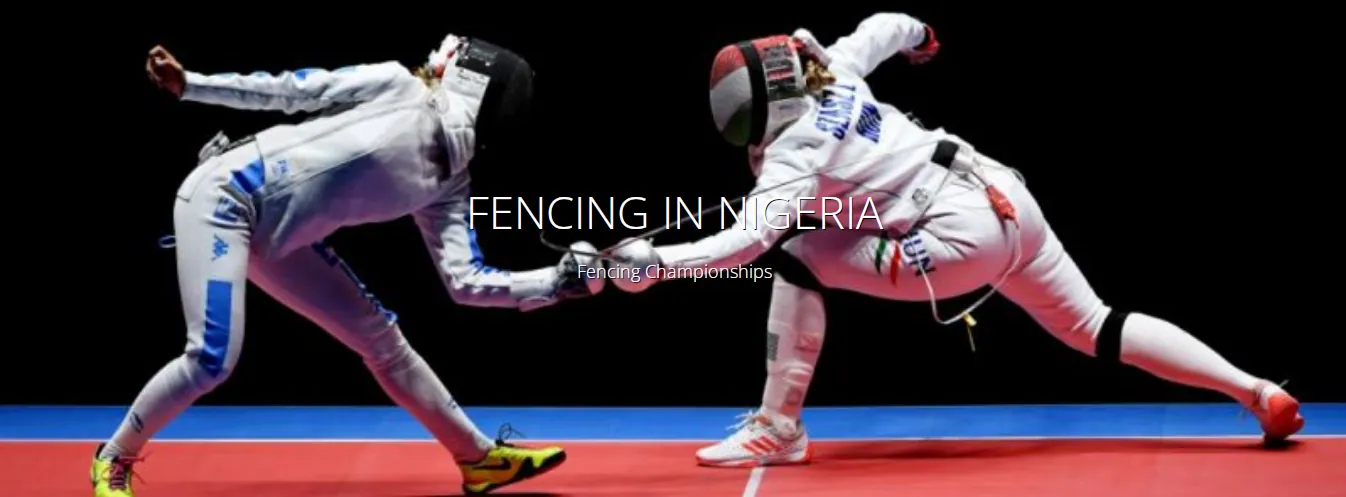
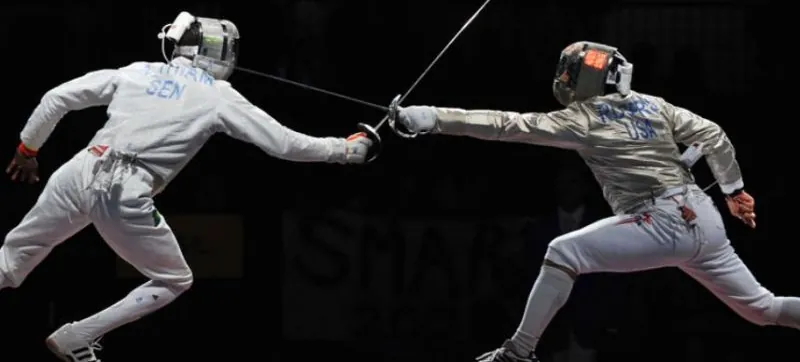
Fencing is a competitive combat sport between two fencers, fought one-on-one. It is performed in three different ways, each with its own weapon: the foil, the Épée and the Sabre.
Foil: is one of the metal weapons out of three used in fencing sport with the estimated total length of 110cm and 90cm long blade. The thrusting weapon is the most commonly used in fencing game.
Fencers that use foil weapon can score a hit by striking the point of the weapon on the targeted opponent. Foil has different governing rules and tactics regarding the attacks which the user can apply to hit or avoid the opponent. A foil fencer’s uniform has some basic characteristics features such as the Lame and a vest which is wired electrically to record the number of hits by the opponent.
Epee: is the heaviest, largest weapon among the three metal weapons used in fencing. It has the same length and blade measurement as the foil, but no right-of-way rule applies. An epee fencer targets the entire body of the opponent from head to toe including the equipment and clothing. This weapon allows a double hit by the users but the hit must occur at 1/25 seconds of each other.
Sabre: is one of the weapons used by modern fencers. It has the total length of 105cm with the blade measuring 88cm. Sabre movement and attacks are extremely fast such that the fencer can use the edge of the blade to attack the opposing partner(s) unlike the other two.
Like the foil, the sabre uses the convention of "right of way" to determine who acquires the touch; the fencer who starts the attack has the right of the way. To avoid being hit while using the sabre, the opposing sabre fencer attempts to dodge the attack and if successful, fight back. Then to avoid being parried, the attacker may use several tactics such as disengages or coupes to avoid the opponent’s blade.
Fencing is one of only five sports that have featured at every modern Olympic Games, together with swimming, athletics, gymnastics and cycling. The game is basically known to focus on the three weapons mentioned above to target opponents and then become a champion.
Fencing sports competition is involved with different rules such that the competitive fencers are meant to specialize on one weapon among the three which include foil, épée, and sabre. Fencing is a very nice sport that teaches many disciplines, focus and concentration.
Fencing has become a trending sport in Nigeria formally established in the recent years as an Olympic sport. It came with the assistance of International Fencing Federation and the Nigeria fencing federation as the grass root of the development.
Immediately after the introducing the game in the country, many indigenes that got inspirations in the sport began to participate actively. Training of Nigerian fencers commenced thereafter. The country trained qualified fencers who had represented in several tournaments like Cadet and Junior African Fencing Championship and All-African Games.
In this section
Explore fencing in Nigeria
History of fencing in Nigeria
From 1997 to hosting the Commonwealth Championships.Read more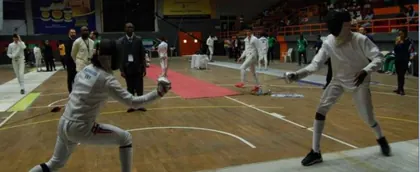
Fencing competitions
Lagos 2025, Abidjan 2026 and the Commonwealth Championships.Read more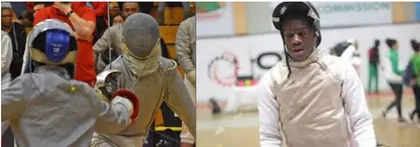
Nigerian fencers
The Hall of Fame and today’s ranked fencers.Read more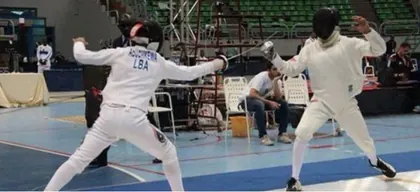
Inkosi Brou
Nigeria’s top junior sabre fencer.Read more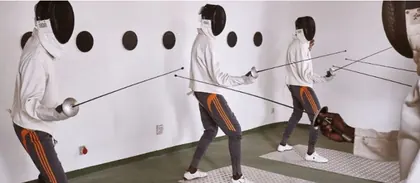
Contact Nigerian fencing
The Nigeria Fencing Federation.Read more
Advertisement
Benefits of fencing
Fencing is a combat sport that has been part of every modern Olympic Games since the first in 1896. It later came to Nigeria in the recent years. The sport has many benefits to physical and mental health. Some of the benefits of fencing include but not limited to the following:
- It produces flexibility and mobility in the hips due to the lunging motion used in attacks while performing the game. It helps also in cardiovascular response, aerobic and anaerobic fitness.
- On the other, a regular fencer develops good flexibility in the arms, hands and legs as well because it is a sport with a number of physical fitness.
- Fencing is a very good sport that helps to boost the mental and physical health and fitness of the human body. With respect to the mental aspect, it enhances concentration and mental strength. Improves focus, sharpens up strategic thinking and decision-making skills.

Statistics · Checked 29 September 2026
Nigerian fencing in numbers
-
1896
Olympic sport since
One of five ever-present sports
-
1997
Federation formed
Nigeria Fencing Federation, Lagos
-
2018
First international medal
Tosan Egbesemirone, junior foil bronze
-
2025
African Championships host
Lagos, 18 countries
-
2026
Commonwealth hosts
First in Africa, 20 nations
-
1st
International gold
Oghenegaren Osievwa-Thompson, 2026
-
24
Commonwealth medals
1 gold, 5 silver, 18 bronze
-
65th
Best senior ranking
Oluwafolayemi Akinyosoye, sabre
Quick answers
Fencing in Nigeria: facts and figures
Is fencing played in Nigeria?
Yes. The Nigeria Fencing Federation, based in Lagos, runs school clubs, national competitions and national teams in foil, épée and sabre. Nigeria hosted the African Fencing Championships in 2025 and the Commonwealth Fencing Championships in 2026.
What are the three fencing weapons?
The foil (110 cm long, 90 cm blade, target the torso), the épée (same size, heaviest, whole body is the target) and the sabre (105 cm, 88 cm blade, cutting and thrusting above the waist).
Has Nigeria won a fencing gold medal?
Yes. At the 2026 Commonwealth Fencing Championships in Lagos, 17-year-old Oghenegaren Osievwa-Thompson won Nigeria’s first international fencing gold. Nigeria finished fourth on the medal table with 1 gold, 5 silver and 18 bronze.
Who is Nigeria’s best fencer?
In 2025 UK-based sabre fencer Oluwafolayemi Akinyosoye became Nigeria’s highest-ranked senior (65th in the world), while Nigerian-American Inkosi Brou was the first Nigerian in the world top 10 of junior men’s sabre.
Who leads Nigerian fencing?
Adeyinka Samuel, president of the Nigeria Fencing Federation, who in August 2026 became the first African elected president of the Commonwealth Fencing Federation.