Kickboxing · Careers
How to build a kickboxing career in Nigeria
From your first pad session to the national team and beyond: how to train safely, compete, earn and build a life in kickboxing.
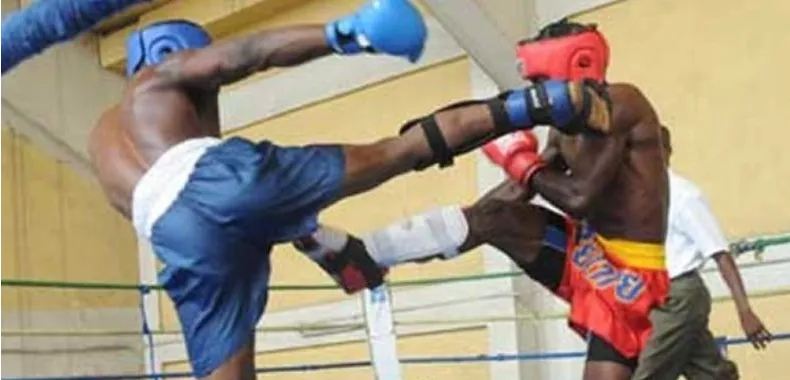
Advertisement
Careers in kickboxing
Your road into kickboxing
A Lagos-born boy moved abroad, walked into a kickboxing gym at 18 after watching a martial arts film, and became one of the best kickboxers of his generation, with 75 wins and 5 losses, before winning the UFC middleweight title twice. Israel Adesanya's story has made kickboxing a dream for thousands of young Nigerians. This page shows the real road behind the dream.
It is written for young kickboxers, parents, teachers and gym coaches. It explains how to start safely, how the Kick Boxing Federation of Nigeria (KBFN) competitions work, how to reach the national team, the honest truth about money, the careers around the ring, and how to avoid fake officials. Everything was checked on 1 October 2026.
The honest truth first: almost every Nigerian kickboxer is an amateur. There is no professional kickboxing league at home, and the few Nigerians who earn well from striking did it abroad, often after moving into MMA. Train for the love of the sport, keep studying, and build the skills that turn a fighter into a coach.
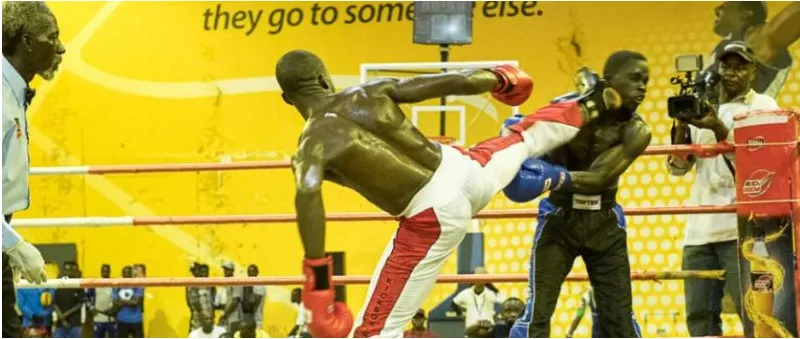
Career facts · Checked 1 October 2026
Kickboxing careers in numbers
-
16
Medals at Yaoundé 2018
Nigeria: 3 gold, 9 silver, 4 bronze at the African Championships.
-
75-5
Adesanya's kickboxing record
The Lagos-born star's record before the UFC.
-
7
WAKO disciplines
Three in the ring and four on the tatami.
-
2021
Full IOC recognition
WAKO joined the Olympic family of recognised sports.
The pathway at a glance
Six stages from beginner to the national team
Ages are a guide. Adesanya started at 18, so it is never too late to begin.
Age 8 to 14
Learn the basics safely
Fitness, footwork, guard and technique in a supervised gym, with no hard sparring.
Age 12 to 17
School sports and youth games
The KBFN has brought kickboxing into school sports and the National Youth Games.
Age 16 to 25
Universities and the Sports Festival
Kickboxing is on the NUGA programme and draws big entries at the National Sports Festival.
Age 17 and up
National team and WAKO Africa
Nigeria won 16 medals at the 2018 African Kickboxing Championships in Yaoundé.
Age 18 and up
Professional ring or the cage
A few Nigerians have turned professional abroad, in Glory, K-1 and later the UFC.
Age 22 and up
Coach, referee, gym owner
The longest careers in kickboxing are built in the corner and the classroom.
Step by step
Seven steps to a kickboxing career
Follow these in order. Each step builds on the one before it.
Find a real gym and a qualified coach
Kickboxing is a full-contact sport, so the coach matters more than the gym's equipment. Look for a club that enters KBFN or state association competitions, and a coach who teaches defence and control before power.
- Watch a session first. Beginners should be drilling technique and pads, not being thrown into hard sparring.
- Ask whether the club's fighters compete in official events, and which state association it belongs to.
Learn the styles and choose your lane
The world body, WAKO (World Association of Kickboxing Organisations), runs seven competition disciplines. Ring events are full contact, low kick and K-1 rules, fought over three two-minute rounds. Tatami (mat) events are point fighting, light contact, kick light and musical forms, which are performed routines. Young athletes usually start on the tatami, where contact is controlled.
Build discipline and character, not just power
KBFN president Dr Mykel Eneduwa says the federation promotes kickboxing from an angle of respect, indomitable spirit, integrity and discipline. At the 2025 National Sports Festival he warned that the number one factor in kickboxing is integrity. Coaches and selectors notice the fighter who respects officials and opponents.
Compete at school, youth and university level
Eneduwa says the KBFN brought kickboxing into school sports, the National Youth Games and NUGA, the Nigerian University Games. At the 2025 National Sports Festival in Ogun State, kickboxing had one of the highest numbers of participants of any major sport. Each of these is a stage where state and national coaches can see you.
Earn a place on the national team
Nigeria competes at WAKO African and world championships. At the 5th African Kickboxing Championships in Yaoundé, Cameroon, in April 2018, Nigeria won three gold, nine silver and four bronze and finished third behind Algeria and Cameroon. Kickboxing is not on the African Games or Commonwealth Games programme, so these championships are the top targets. WAKO gained full IOC recognition in July 2021, which keeps the Olympic door open for the future.
Think hard before turning professional
The professional route usually runs abroad. Israel Adesanya won the 2016 Glory Middleweight Contender Tournament; the Njokuani brothers built Muay Thai records in Texas before the UFC; Ibadan-born Andy Ologun fought in K-1 World MAX in Japan. Every one of them spent years training and fighting as an amateur first. Never sign a fight contract without a parent, coach or lawyer reading it, and never pay anyone to “arrange” a professional fight.
Build your second career early
Fighting careers are short and injuries are common. Use your years on the team to learn coaching, refereeing, fitness training or sports administration, and keep up your education. As Eneduwa puts it, the aim is not just to fight in the ring but to make progress outside it.
Advertisement
Pay
Making a living from kickboxing
Pay in kickboxing is where dreams and reality are furthest apart. These are the facts we could verify.
| Level | What we could verify | Source |
|---|---|---|
| Nigerian competitions | No prize money or allowances for KBFN events are published | SitesNG |
| National team | Nigeria's 2018 African Championships team won 16 medals, but no team bonus figures are published | SitesNG |
| Professional abroad | No reliable average pay for kickboxers is published; purses depend on the promotion | SitesNG |
| Reality | Most Nigerian kickboxers fund themselves through family, jobs, coaching and small sponsors | SitesNG |
Our advice: earn from the skills kickboxing gives you. Fitness classes, self-defence courses and coaching children are steady work for a good kickboxer, and they last long after your fighting days.
Beyond fighting
Careers around the ring
Kickboxing needs many more coaches, referees and organisers than it needs champions.
| Career | How to start in Nigeria | Next level |
|---|---|---|
| Coach | Assist your club coach with beginners and ask the KBFN or your state association about coaching courses. | Coach state and national teams at WAKO events. |
| Referee and judge | Learn the WAKO rules for ring and tatami, then volunteer at club and state events and ask the KBFN how officials are trained. | National and international panels. Eneduwa has called for better officiating, so good referees are needed. |
| Fitness and self-defence instructor | Run classes in gyms, estates, schools and offices once you are an experienced kickboxer. | Open your own gym or training brand. |
| Administrator | Volunteer with your state association at the Sports Festival, NUGA or youth games. | Federation, state sports council or event promotion roles. |
| Physio, medic or media | Study physiotherapy, medicine or journalism and work ringside. | Event medical teams and combat sports media. |
Women's kickboxing
Kickboxing for girls and women
Kickboxing is open to girls and women, from school sports to the national team. Our archive names Nigerian women such as Caroline Amado among the country's kickboxers. Tatami disciplines such as point fighting and light contact are a controlled way to start, and musical forms reward technique and timing rather than hitting.
Parents: visit the gym, meet the coach and watch how sparring is supervised. A good club will welcome you.
Stay safe
Safety, clean sport and fake officials
Two dangers threaten young kickboxers more than any opponent: unsafe training and fake officials.
Train safely
- Wear the gloves, headguard, gum shield, shin guards and groin guard your competition rules require.
- Get a medical check before you start full-contact sparring, and stop training after any blow that leaves you dizzy or confused until a doctor clears you.
- Never cut weight dangerously to make a weight class.
Clean sport
Nigeria's National Anti-Doping Act, 2025 created the Nigeria Anti-Doping Centre, whose technical board was inaugurated in July 2026 to educate athletes and protect clean ones. Check every supplement and medicine before you take it.
Fake officials
In April 2026 the KBFN publicly disowned three suspended men who had issued statements in its name, and warned the public not to do business with them. Its Secretary General, Javan Bernard, said all official communications, programmes and events of the KBFN go through his office or other authorised channels.
Before you pay anyone in kickboxing
- Check that the event or programme is announced through the KBFN's official channels or your state association.
- Never pay for a “guaranteed” national team place, belt or professional contract.
- Be wary of anyone who promises fights abroad but will not let your parents or coach speak to the promoter.
- Keep receipts for any registration fee, and ask what it covers.
Advice from the stars
What Nigerian kickboxing leaders want you to know
Every quote below was checked word for word against the outlet named under it. We add one practical lesson to each.
I just want people to know it's possible. Whatever you want to get done, it's possible. You don't have to be stuck where you are.
Israel AdesanyaLagos-born kickboxer (75-5) and two-time UFC middleweight champion
Andscape, 4 October 2019The lesson: Where you start does not decide where you finish: the work does.
So, it's not just teaching them how to fight in the ring, but also how to make progress outside the ring as well.
Dr Mykel EneduwaPresident, Kick Boxing Federation of Nigeria
Sports247, 2 August 2025The lesson: Choose a coach who cares about your schooling and character, not just your punches.
The number one factor in kickboxing is integrity.
Dr Mykel EneduwaPresident, Kick Boxing Federation of Nigeria, at the 2025 National Sports Festival
Sports247, 30 May 2025The lesson: Respect officials and opponents: selectors remember how you behave.
Your first move
Where to start this week
You can start this week. Tick these off:
- Find a kickboxing club near you that enters official competitions, and watch a session.
- Get a basic medical check and the right protective gear.
- Learn the difference between ring and tatami disciplines and try both.
- Ask your school or university about kickboxing in school sports, the National Youth Games or NUGA.
- Train your defence as hard as your attack.
- Keep up your studies and start learning to coach.
- Parents and coaches: contact the KBFN through its official channels for programmes.
See how to reach the federation on our Kickboxing Federation of Nigeria page, meet Nigeria's best on our Nigerian Kickboxers page, and compare other fighting arts on our Martial Arts hub.
Keep exploring
Explore Nigerian kickboxing
Quick answers
Kickboxing careers in Nigeria: your questions
Who governs kickboxing in Nigeria?
The Kick Boxing Federation of Nigeria (KBFN), a member of the World Association of Kickboxing Organisations (WAKO). Its president is Dr Mykel Eneduwa, and its Secretary General, Javan Bernard, says all official communications go through his office or other authorised channels.
Where can young Nigerians compete in kickboxing?
In club and state events, school sports, the National Youth Games, the Nigerian University Games (NUGA) and the National Sports Festival, where kickboxing drew one of the biggest entries in Ogun in 2025. The national team competes at WAKO African and world championships.
Is kickboxing an Olympic sport?
Not yet. WAKO received full recognition from the International Olympic Committee in July 2021, but kickboxing is not on the Olympic programme. It is also not on the African Games or Commonwealth Games programme.
Can you earn a living from kickboxing in Nigeria?
Very few people can from fighting alone. No prize money for Nigerian events is published, and the Nigerians who earned well from striking, such as Israel Adesanya, did it abroad. Most Nigerian kickboxers earn by coaching, teaching fitness and self-defence, or from other jobs.
What are the kickboxing disciplines?
WAKO has three ring disciplines (full contact, low kick and K-1 rules, fought over three two-minute rounds) and four tatami disciplines (point fighting, light contact, kick light and musical forms).
How did Israel Adesanya start kickboxing?
Adesanya, born in Lagos in 1989, started kickboxing at 18 after watching the film Ong-Bak. He built a 75-5 record, won the 2016 Glory Middleweight Contender Tournament and later became a two-time UFC middleweight champion.
How do I avoid fake kickboxing officials?
Only trust programmes announced through the KBFN's official channels or your state association. In April 2026 the KBFN disowned three suspended men who had issued statements in its name and warned the public not to do business with them.