Lawn Tennis · Careers
How to build a tennis career in Nigeria
From the first lesson to the ITF junior tour, US college courts and the Davis Cup: every step, what tennis pays and the rules that protect you.

Advertisement
Careers in tennis
Your road to a life in tennis
Walk past the courts at Onikan in Lagos, the National Tennis Centre in Abuja or a state stadium on a weekday evening and you will see the same thing: children chasing balls for a coach, teenagers grinding through drills, and a few players who believe they can follow Nduka Odizor to Wimbledon. Tennis has been played in Nigeria since the Lagos Lawn Tennis Club opened in 1895, and today it offers more routes to a good life than most people realise.
This page is for young players, parents, PE teachers and club coaches. It explains each stage from your first racket to the ITF junior circuit, the Davis Cup and the professional tour, the US college scholarship route that has worked for Nigerian girls and boys, what tennis really pays, and the careers in coaching and umpiring that keep the sport alive. Every figure was checked on 1 October 2026.
One honest truth first: no Nigerian has ever reached the world's top 50, and professional tennis is expensive. The best Nigerian ranking is still Nduka Odizor's No. 52, set in 1984. Most Nigerian players fund themselves through clubs, sponsors, scholarships and coaching. That is not a reason to give up. It is a reason to plan well, protect your education and use every free opportunity the federation and the ITF offer.
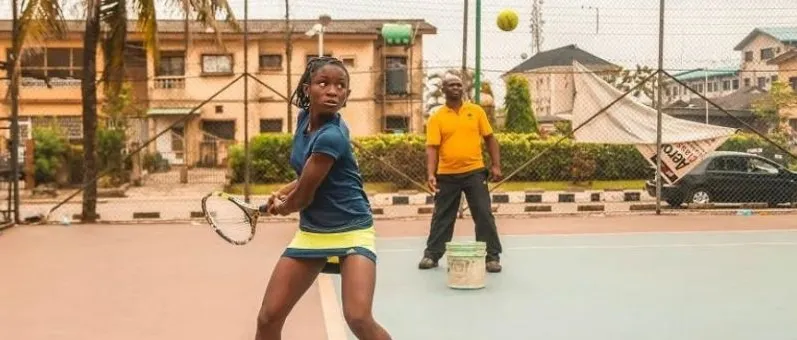
Career facts · Checked 1 October 2026
Nigerian tennis careers in numbers
-
1895
Lagos Lawn Tennis Club
Nigeria's oldest club, at Onikan, Lagos Island.
-
52
Best Nigerian ATP ranking
Nduka Odizor, June 1984.
-
$25,000
Grand Slam grant, 2026
Awarded to Nigerian junior Seun Peter Ogunsakin.
-
3
ITF White Badge referees
Nigerians certified in April 2025.
The pathway at a glance
Six stages from first racket to the tour
Ages are a guide, not a rule. Some players start late; others take the college route before turning professional.
Age 5 to 10
Club, school and mini tennis
Start at a club, school or stadium court with a coach. Learn grips, footwork and to love the game. Oyinlomo Quadre began at a club right next to her school.
Age 10 to 14
State and national junior events
Play your state championships and national junior events. Marylove Edwards was ranked No. 4 among Nigeria's senior women at 12.
Age 12 to 16
West and Central Africa junior tennis
ITF and Confederation of African Tennis under-14 and under-16 events. Edwards became Africa's No. 1 under-14 girl in June 2017.
Age 14 to 18
ITF World Tennis Tour Juniors
Get an ITF player number (IPIN) and earn world junior points. Abuja has hosted ITF J30 events in 2024 and 2026.
Age 17 and up
Senior national events and Davis Cup
The CBN Senior Open and national opens, then the national team for the Davis Cup, Billie Jean King Cup and African Games.
Age 18 and up
College tennis or the pro tour
A US university scholarship, or ITF professional events chasing ATP and WTA ranking points. Many players do the first, then the second.
Step by step
Eight steps to a tennis career
Follow these in order. Each step builds on the one before it.
Start with a coach, and stay in school
Tennis is a technical sport: bad habits learned at eight are hard to fix at sixteen. Find a club or stadium programme with a qualified coach as early as you can. At the same time, keep your school work strong. The most reliable tennis route out of Nigeria today runs through US universities, and they need your O'level results and SAT score as much as your forehand.
- Ask your state tennis association which clubs run junior programmes.
- Play three to five times a week if you can, and add running and skipping for fitness.
Play every junior tournament you can reach
Matches teach what drills cannot. Enter your state championships, school competitions and sponsored junior events. Private tournaments matter too: in April 2026 the Tennista Foundation staged its second junior tournament at the Lagos Country Club, Ikeja, with ₦150,000 and a new racket for the winner, and its president said the aim was to win US college scholarships for Nigerian juniors.
Get your ITF player number and chase world junior points
To play the ITF World Tennis Tour Juniors, a player registers for an International Player Identification Number (IPIN). Every junior with an active IPIN must complete the ITIA's online integrity course on anti-doping and anti-corruption before entering. ITF junior events award the world ranking points that coaches, colleges and sponsors look at.
The good news is that these events now come to Nigeria. In June 2024 Abuja hosted an ITF J30 tournament, and the NTF secretary general said hosting at home let 30 to 60 Nigerian juniors play, where a trip abroad could take only six. The 2026 J30 in Abuja drew players from 14 countries; Success Ogunjobi won the girls' singles title 6-2, 6-1.
Win at home: national opens and the CBN Senior Open
One of Nigeria's longest-running events is the CBN Senior Tennis Championship. The 47th edition in Abuja in June 2026 was won by Canice Abua and Etoro Bassey, and it also has men's and women's wheelchair singles. In June 2026 the NTF ran the CBN Open (12 to 20 June) and the DavNotch National Open (20 to 27 June) back to back in Abuja so players could collect match practice and ranking points.
Earn a national team place
Good results at home and abroad lead to the national squads. The men play the Davis Cup: in February 2026 Nigeria beat Uzbekistan 3-1 at the Lagos Lawn Tennis Club to reach World Group II, then lost 4-0 to Morocco in Rabat in September, and travel to El Salvador on 5 to 7 February 2027 to keep their place. Nigerian women have won team medals at three African Games in a row. Read the full record on our Davis Cup and results page.
Apply for every grant you are eligible for
The Grand Slam Player Development Programme helps players from developing tennis nations. In January 2026 it gave 65 players from 42 countries grants of $12,500 to $50,000. Nigeria's Seun Peter Ogunsakin received $25,000, described as the second-highest ranked Nigerian junior since combined rankings began in 2004. Junior grants are for girls aged 14 to 17 and boys aged 15 to 18; ask the NTF how nominations work.
Choose your route at 18: college or the tour
At 18 most players face a choice. The US college route gives you a degree, top coaching and free competition, and you can still turn professional afterwards. The professional route means ITF World Tennis Tour events, paid for out of your own pocket or a sponsor's, until your ranking earns prize money. Be honest about your level and your funding before you choose. See the scholarships section below.
Build a life in tennis that lasts
Even the best players stop competing. Get your ITF coaching qualification or umpiring badge while you are still playing, keep studying, and save what you earn. Coach Michael Okopi, a former national junior champion, retired from competition in 2010 with a shoulder injury, then became a PTR and ITF certified coach and has developed players from scratch.
Advertisement
Scholarships
US college scholarships: the proven route
For many young Nigerians, the smartest tennis career move is a sports scholarship to a US university. It pays for your education, gives you daily coaching and matches, and keeps the professional door open.
Nigerians who have done it
- Marylove Edwards, born in Lagos in 2005, plays for Georgia Gwinnett College. She helped win the 2025 NAIA national team title and was a first-team NAIA All-American in 2026, unbeaten at No. 1 singles.
- Oyinlomo Quadre moved to a tennis academy in Morocco at about 11, studying online. She later played for Florida International University and in 2025 moved to Oklahoma State University on a sports scholarship, studying psychology and IT.
- The Fusion Tennis Foundation in Lagos has helped players including Christopher Bulus, Venus Ubiebi and Martins Abamu win US scholarships.
What colleges look for
Fusion's founder, Fuad Quadre, lists the basics: finish secondary school with your O'level results, take the SAT and score well, and reach a reasonable standard of tennis. In his words, “How good you are will determine the level you'll get into for the scholarship.” ITF junior results and a record of national events help coaches judge your level.
Our advice: start planning at 14 or 15, not 18. Keep copies of your results, rankings and match videos, and only work with foundations and coaches whose past scholarship players you can contact yourself.
Pay
Making a living from tennis
Tennis pay in Nigeria is mostly modest, and a lot of what you hear is rumour. These are the figures we could verify.
| Level | What we could verify | Source |
|---|---|---|
| CBN Senior Championship | More than ₦13 million in total prize money at the 43rd edition, with ₦1 million each to the men's and women's singles champions | Daily Trust, May 2021 |
| Wheelchair singles at the CBN event | ₦1.5 million in each of the men's and women's wheelchair singles draws (43rd edition) | Daily Trust, May 2021 |
| Junior tournaments | ₦150,000 and a $260 racket to the winner of the 2026 Tennista junior event in Lagos | The Guardian, April 2026 |
| Grand Slam development grant | $25,000 to Seun Ogunsakin in 2026; grants run from $12,500 to $50,000 | Roland-Garros, January 2026 |
| Professional tour | Prize money depends on the event level and your results; no reliable average exists for Nigerian players | SitesNG |
Most Nigerian players today combine several sources: club and company sponsors, state support, scholarships and coaching income. Plan for travel, rackets, strings and entry fees before you plan for prize money, and keep a separate savings account from your first naira.
Beyond playing
Careers around the court
Not every tennis career is on court. Nigerian tennis needs coaches, umpires, referees and administrators, and these jobs can last a lifetime.
| Career | How to start in Nigeria | Next level |
|---|---|---|
| Coach | Ask the NTF or your state association about the next ITF Level 1 course. The NTF ran one at the National Tennis Centre, Abuja, from 17 to 26 June 2026. At an earlier 10-day course there, 40 coaches from all six geopolitical zones completed it. | Higher ITF levels and international certificates such as the PTR. |
| Umpire or referee | Join the Nigeria Tennis Umpires Association and work your local and national events. | ITF badges. In April 2025 Joseph Edili, Bitrus Danjuma and Dr Folashade Ogunshola earned ITF White Badge referee status at a school in Abidjan, so they can now officiate internationally. |
| Club professional | Qualified coaches can teach juniors and adult members at clubs such as the Lagos Lawn Tennis Club and the Abuja Tennis Club, which has 22 courts. | Head coach, academy owner or national junior coach. |
| Administrator | Volunteer at your club, a state association or a tournament. | Tournament director, federation or sponsor roles. |
Nigeria had no ITF-certified referees after the deaths of Arinola Isa Banire and Henry Okoro Ubochi, until the three White Badge passes in 2025. That gap shows how much room there is for new officials who learn the rules properly.
Women's tennis
The path for girls and women
Nigerian girls have produced some of the country's best tennis stories of the last decade.
- Marylove Edwards started at four in Lagos, became Africa's No. 1 under-14 at 12 and is now an All-American in the US.
- Oyinlomo Quadre left home at about 11 for an academy in Morocco and now plays college tennis on scholarship.
- Nigerian women won African Games team bronze in 2015 and 2019 and team silver in Accra in 2023, with Marylove Edwards in the side.
- Success Ogunjobi won the girls' singles at the 2026 ITF J30 in Abuja and reached the final of the 47th CBN Senior Championship.
Parents often worry about travel and safety for girls. Meet the coach, watch training, ask who travels with the team, and never let a child travel abroad without a guardian and a written programme.
Stay safe
Match-fixing, doping and scams: stay safe
Tennis has its own dangers for young players, and they are not always obvious.
Match-fixing: it has ended Nigerian careers
The International Tennis Integrity Agency (ITIA) has sanctioned several Nigerian players. In March 2021 two Nigerians were banned for life for corruption linked to a 2019 tournament; one had only attended as a so-called coach. In November 2024 three more Nigerian players received bans of over two years and a $10,000 fine each for breaches in 2017 and 2018 linked to a betting syndicate. In 2019 another Nigerian player was suspended and fined for fixing at an ITF Futures tournament in Abuja in May 2017.
Five rules to protect your tennis career
- Never accept money, gifts or favours to lose a match, a set or a game, or to pass on inside information.
- Report any approach to the ITIA as soon as possible. Failing to report is itself an offence.
- Never bet on tennis, and never give betting tips about your own or anyone's matches.
- Check every medicine and supplement before you take it; complete the ITIA integrity course honestly.
- Be wary of anyone who asks for money to “arrange” a scholarship or academy place abroad. Contact the college coach directly.
Anti-doping
Tennis follows the Tennis Anti-Doping Programme, run by the ITIA. At home, Nigeria's National Anti-Doping Act, 2025 set up the Nigeria Anti-Doping Centre, whose Technical Board was inaugurated on 3 July 2026 to educate athletes and enforce the rules. Tell every doctor you are a competitive athlete.
Advice from the stars
What Nigerian tennis people want you to know
Every quote below was checked word for word against the outlet named under it. We add one practical lesson to each.
Be you and stay consistent. If it was easy, everyone would do it. So, you just have to keep going.
Oyinlomo QuadreNigerian international and US college player
Marie Claire Nigeria, 5 September 2025The lesson: Talent opens the door; showing up every day keeps it open.
What Nigerian tennis lacks most is not talent. It is enough quality competition and exposure.
Sadiq AbdullahiSeoul 1988 Olympian
The Guardian (Nigeria), 23 September 2026The lesson: Play every good tournament you can reach, at home first.
Coaches play a crucial role in shaping the careers of tennis players, and their words can either inspire or discourage players.
Rotimi AkinloyeNTF technical director, ITF Level 1 course
News Agency of NigeriaThe lesson: Choose your coach as carefully as you choose your racket.
How good you are will determine the level you'll get into for the scholarship.
Fuad QuadreFounder, Fusion Tennis Foundation
Nigeria Tennis Live, 23 August 2021The lesson: For a US scholarship, your level and your grades both decide the offer.
Your first move
Where to start this week
Whatever your age, you can start this week. Tick these off:
- Find a club, school or stadium court near you with a coach, and book a trial session.
- Ask your state tennis association about junior events and how to enter.
- Keep your school grades up and plan for the SAT if college tennis interests you.
- Learn the rules on match-fixing and anti-doping before your first big tournament.
- Keep a simple diary of your results, rankings and match videos.
- Coaches: ask the NTF about the next ITF coaching course.
- Parents: contact the Nigeria Tennis Federation for official junior programmes.
Find the federation's address on our Contact the Nigeria Tennis Federation page, and see where to play on our tennis clubs page.
Keep exploring
Explore Nigerian tennis
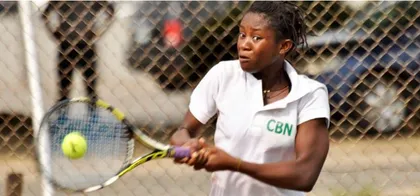
Lawn tennis in Nigeria
From Onikan in 1895 to the Davis Cup World Group.Read more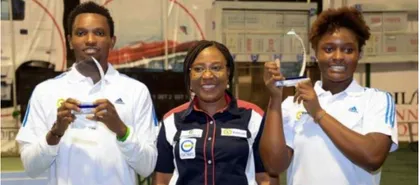
Davis Cup and results
Uzbekistan beaten in Lagos, 2026.Read more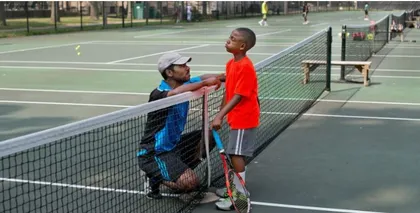
Tennis clubs in Nigeria
Where to play and train, from Lagos to Abuja.Read more
Nigerian tennis players
Odizor, Mmoh, Edwards and the Hall of Fame.Read more
Quick answers
Tennis careers in Nigeria: your questions
How do I start playing tennis in Nigeria?
Find a club, school or stadium court with a qualified coach, such as the Lagos Lawn Tennis Club, the Abuja Tennis Club or your state stadium, and ask your state tennis association about junior programmes and tournaments.
How do Nigerian juniors get a world ranking?
They register for an ITF player number (IPIN), complete the ITIA's online integrity course and play ITF World Tennis Tour Junior events. Abuja hosted ITF J30 events in 2024 and 2026, so Nigerian juniors can now earn points at home.
Can a Nigerian tennis player get a US scholarship?
Yes. Marylove Edwards plays for Georgia Gwinnett College and Oyinlomo Quadre for Oklahoma State University. Colleges want O'level results, a good SAT score and a strong tennis level shown by tournament results.
How much can a tennis player earn in Nigeria?
Prize money is modest. At the 43rd CBN Senior Championship in 2021 the singles champions won ₦1 million each from a total of more than ₦13 million. Most players also rely on sponsors, scholarships and coaching income.
How do I become a tennis coach in Nigeria?
Take an ITF Level 1 coaching course through the Nigeria Tennis Federation. The NTF ran one in Abuja from 17 to 26 June 2026, and an earlier course qualified 40 coaches from all six geopolitical zones.
How do I become a tennis umpire in Nigeria?
Join the Nigeria Tennis Umpires Association and officiate local and national events, then work towards ITF badges. In 2025 three Nigerians earned ITF White Badge referee status, qualifying them for international events.
What is match-fixing and why should young players care?
It is agreeing to lose or manipulate any part of a match, often for betting gangs. The ITIA has banned Nigerian players for life or for years and fined them. Never accept an approach, and report it to the ITIA at once.