Karate · Careers
How to build a karate career in Nigeria
From your first bow in the dojo to the national team: grading, rankings, selection, honest facts about money and the careers you can build in karate.
Advertisement
Careers in karate
Your road through karate
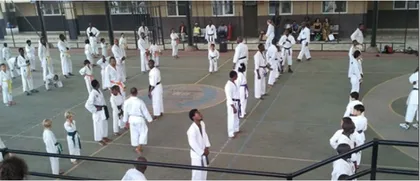
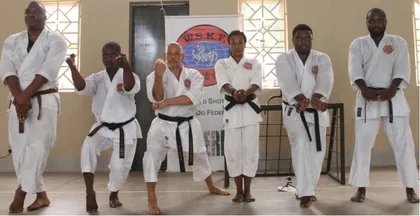
In dojos, school halls and church compounds across Nigeria, children in white gis bow, count in Japanese and practise the same punches and kicks that Gichin Funakoshi taught a century ago. Some of them will become national champions, a few will wear the green and white at African and world championships, and many more will become the senseis, referees and coaches who keep the art alive.
This page is for young karatekas, parents, teachers and dojo instructors who want to know how far karate can take a Nigerian. It explains each stage from your first class to the national team, how grading and the national ranking system work, the honest truth about money in the sport, the careers you can build as a coach or referee, and the rules that keep young fighters safe. Everything was checked on 1 October 2026.
One honest truth first: karate in Nigeria is an amateur sport. No Nigerian earns a full-time living from competing alone, and the federation itself has had to borrow money to send a team abroad. People build careers in karate by combining competition with teaching, coaching, refereeing and running dojos. Done well, that can last a lifetime.
Career facts · Checked 1 October 2026
Karate careers in numbers
-
1992
KFN founded
The only karate body recognised by the Nigeria Olympic Committee.
-
5
Home medals, Abuja 2025
Nigeria's haul as host of the African Championships.
-
Factor 6
Japanese Ambassador's Cup
A KFN ranked event for national rankings, 2026.
-
€1,000
Premier League gold
WKF prize per category at Karate 1 Premier League events.
The pathway at a glance
Six stages from white belt to the national team
Ages are a guide. Many Nigerian karatekas start in their teens and still reach the national team.
Age 5 to 12
Join a registered dojo
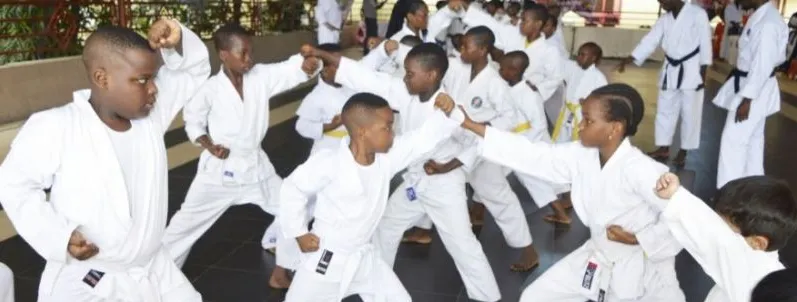
Learn etiquette, stances and basic kata. Children grade through the coloured belts at their own pace.
Age 10 to 16
Club and state competitions
Enter kata and kumite at club, school and state events. Medals here open the door to national events.
Age 14 to 21
National ranked events
KFN ranked events, such as the Japanese Ambassador's Cup in Abuja, earn points on the national ranking list.
Age 16 and up
National team selection
Top-ranked karatekas are picked for West African, African and world championships.
Age 18 and up
African Games and the world stage
The next African Games are in Cairo in January 2027. The Karate 1 Premier League is the world's elite circuit.
Age 20 and up
Black belt, instructor, referee
Senior black belts teach, coach, referee and run dojos: the way most Nigerians make karate a career.
Step by step
Seven steps to a karate career
Follow these in order. Each step builds on the one before it.
Choose a proper, registered dojo
Your first instructor shapes everything. Look for a dojo that belongs to a recognised body: the Karate Federation of Nigeria (KFN) is the only karate body recognised by the Nigeria Olympic Committee, and style associations such as the Nigerian Association of Shotokan Karate (NASK) and WSKF Nigeria run graded dojos in many states.
- Watch a class before you join. Good instructors are strict about etiquette and safety and patient with beginners.
- Ask which association grades the dojo's students, and whether its students compete in KFN events.
Master the three pillars: kihon, kata and kumite
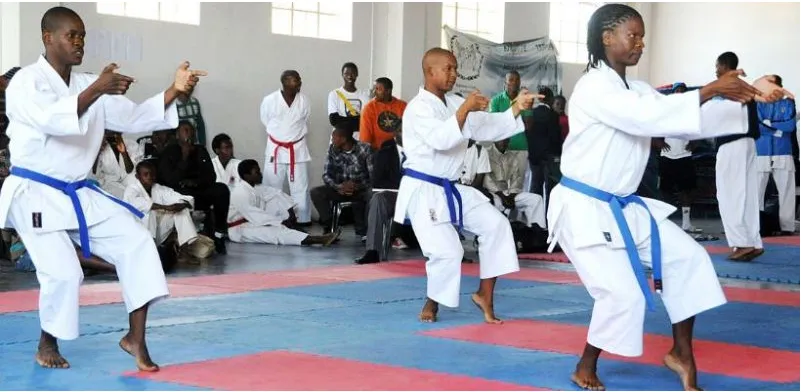
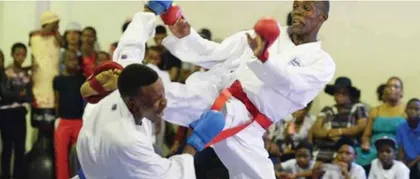
Every karateka trains kihon (basics), kata (set forms) and kumite (sparring). Competition has two separate events: kata, judged on technique and power, and kumite, a points-based fight in weight classes. Many young Nigerians find they are stronger at one than the other. Oluwaseun Olorunmbe took silver in the men's kata at the 2025 African Championships in Abuja, so kata is a real route to a medal, not a lesser option.
Grade honestly and patiently
Belts are earned in gradings run by your association. Do not chase a black belt quickly: a rank you cannot defend in the dojo will not help you on the mat. A formal rank requires a competent demonstration of kata. WSKF Nigeria, for example, holds annual courses and gradings around the country.
Compete, and climb the national ranking list
The KFN runs a national ranking system. President Chukwudi Dimkpa explained in August 2026 that the Japanese Ambassador's Cup in Abuja is a KFN ranked event rated Factor 6, which lets athletes improve their national ranking before international events. Start with club and state championships, then target ranked events. Keep a record of every result.
Earn a national team place
Nigeria sends karatekas to the UFAK (Union of African Karate Federations) zone and African championships, the African Games and the World Championships. In November 2025 a team of five, four women in kumite and Olorunmbe in kata, flew to Cairo for the World Championships with coach Efezino Akpotu. At the 2025 African Championships in Abuja, Godfirst Orie Ukoha-Sampson reached the women's kumite -55kg final. The African Championships for 2026 were set for Algiers in September.
Study, and plan a second career from the start
Karate rarely pays the bills on its own. Stay in school, and think early about the careers around the sport: coaching, refereeing, teaching karate in schools, fitness work or sports administration. The skills of a black belt (discipline, leadership and patience) are valued in every job.
Become a coach, referee or dojo leader
The World Karate Federation (WKF) runs coach certification in kata, kumite and general karate through its online learning platform, and referee courses with examinations in kata and kumite. Dimkpa has promised that the KFN will strengthen coaches, referees and technical officials through continuous education and certification. See the careers table below.
Advertisement
Pay
Making a living from karate
Here is the honest picture of money in karate, with only verified figures.
| Level | What we could verify | Source |
|---|---|---|
| Nigerian competition | No prize money or salaries for Nigerian karatekas are published | SitesNG |
| Federation funding | The KFN said it incurred debts to send its team to the 2025 World Championships in Cairo, and asked the NSC for help | BSNSports, November 2025 |
| Karate 1 Premier League | Per category: €1,000 for gold, €500 for silver and €250 for each bronze | WKF organising rules |
| Premier League season | An accumulated €10,000 is paid to the Grand Winner of each individual category | WKF organising rules |
What this means: the Premier League is the world's elite circuit, so its prize money is a long-term dream, not a plan. Nigerian karatekas fund themselves through family support, sponsors, state sports councils and, above all, teaching karate. Keep a job, a trade or your studies going alongside training.
Beyond competing
Careers around the dojo
Most people who make a living from karate in Nigeria do it off the competition mat. These are the main careers and how to begin.
| Career | How to start in Nigeria | Next level |
|---|---|---|
| Dojo instructor | Train to black belt under a recognised association (KFN member, NASK, WSKF Nigeria) and assist your sensei with junior classes. | Open your own dojo; teach in schools, estates and gyms. |
| Competition coach | Coach at club and state level and ask the KFN about its coaching courses. | WKF coach certification (kata, kumite or general) through the WKF e-learning platform, needed for the coaching box at major international events. |
| Referee and judge | Officiate at club and state events and ask the KFN how national referees are trained. | WKF referee courses, with an application form and written examinations in kata and kumite. |
| Sports administrator | Volunteer with your state karate association or the KFN at championships. | Federation, state sports council or National Sports Commission roles. |
| Physio, fitness or media | Study physiotherapy, sports science or journalism and work with karate events. | National team support staff or sports media. |
The WKF publishes public lists of its accredited coaches, so a certified coach can prove it. Ask any instructor who claims an international licence where you can check it.
Women's karate
Karate for girls and women
Karate is one of the most open combat sports for Nigerian girls. Kata rewards precision and power rather than size, and kumite has women's weight classes from -50kg up to +68kg.
- Of the five Nigerians sent to the 2025 World Championships in Cairo, four were women: Loveth Ngozi Okoro (-50kg), Godfirst Orie Ukoha-Sampson (-55kg), Constance Tamunodiepreye Abode (-61kg) and Ujunwa Caroline Nwankwo (+68kg).
- Ukoha-Sampson reached the women's -55kg final at the 2025 African Championships in Abuja.
- Parents often worry about safety. Visit the dojo, watch a class, and ask how sparring is supervised. Competition kumite under WKF rules is light or semi contact with points scored for control.
Stay safe
Safety, anti-doping and dojo warning signs
Karate builds confidence, but every family should know the rules that protect young athletes.
- Anti-doping: Nigeria's National Anti-Doping Act, 2025 created the Nigeria Anti-Doping Centre, whose technical board was inaugurated in July 2026 with a duty to educate athletes down to grassroots and schools. Any karateka at national or international level can be tested. A banned substance in a supplement is still your responsibility.
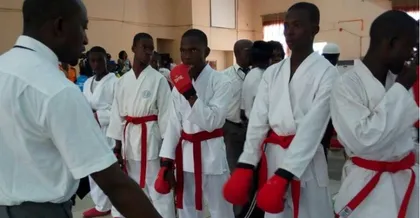
- Safe sparring: beginners should not do free sparring until they have control. Use mitts, gum shields and the protective gear your association requires, and always spar with a qualified instructor present.
- Safeguarding: a good dojo welcomes parents to watch, never asks a child to train alone with an adult behind closed doors, and has more than one adult present at gradings and trips.
Warning signs in a dojo
- The instructor will not say which association grades the dojo, or the association has never heard of him.
- Black belts are “sold” after a few months, or grading fees keep rising with no certificate from a recognised body.
- Someone promises a place in the national team or a trip abroad for a payment. National teams are picked from results and rankings.
- Children are pushed into hard contact sparring without protective gear or supervision.
Advice from the stars
What Nigerian karate leaders want you to know
Every quote below was checked word for word against the outlet named under it. We add one practical lesson to each.
Our athletes deserve a united Federation. Our coaches deserve an enabling environment.
Chukwudi DimkpaPresident, Karate Federation of Nigeria
The Guardian (Nigeria), 5 August 2026The lesson: Train with a dojo inside the recognised system so its plans reach you.
It gave our athletes a valuable opportunity to improve their national rankings while also testing their preparedness for higher-level international competitions.
Chukwudi DimkpaPresident, Karate Federation of Nigeria, on the Japanese Ambassador's Cup
Sports247, 27 August 2026The lesson: Treat every ranked event as a step on the ladder, not a one-off.
Your first move
Where to start this week
Whatever your age, you can start this week. Tick these off:
- Find a registered dojo near you and watch a class before joining.
- Ask which association the dojo belongs to: KFN, NASK, WSKF Nigeria or another recognised body.
- Train kihon, kata and kumite, and find out which you love most.
- Enter your first club or state competition and keep a record of your results.
- Ask your coach about KFN ranked events and how national rankings work.
- Keep up your school work: it protects your future and your second career.
- Parents and coaches: contact the federation or your state association for official programmes.
Find the addresses of the KFN, WSKF Nigeria and NASK on our Contact Nigerian Karate page, and read how the sport grew on our History of Karate page. Interested in other fighting arts? See our Martial Arts in Nigeria hub.
Keep exploring
Explore Nigerian karate
Quick answers
Karate careers in Nigeria: your questions
Can you make a living from karate in Nigeria?
Rarely from competition alone. No prize money for Nigerian events is published, and the KFN said it borrowed money to send its team to the 2025 World Championships. Most Nigerians earn from karate by teaching, coaching, refereeing and running dojos, alongside study or another job.
Who selects the Nigerian karate team?
The Karate Federation of Nigeria, the only karate body recognised by the Nigeria Olympic Committee. It runs ranked events such as the Japanese Ambassador's Cup in Abuja, rated Factor 6, which count towards national rankings used for selection.
Is karate in the Olympics?
Karate made its Olympic debut at Tokyo 2020, held in 2021, but it is not on the programme for Paris 2024 or Los Angeles 2028. It is on the African Games programme, and the next Games are in Cairo from 20 January to 7 February 2027.
How do I become a karate coach or referee?
Earn a black belt under a recognised association, assist your sensei, then ask the KFN about coaching and refereeing courses. Internationally, the World Karate Federation certifies kata, kumite and general karate coaches through its e-learning platform and runs referee courses with written examinations.
Is karate safe for children?
Yes, with a qualified instructor. Beginners should learn control before sparring, wear the protective gear their association requires and always train with an instructor present. Competition kumite under WKF rules is light or semi contact.
What is the prize money in top-level karate?
On the WKF Karate 1 Premier League, each category pays €1,000 for gold, €500 for silver and €250 for each bronze, and the season's Grand Winner in each individual category receives an accumulated €10,000.
Do girls do well in Nigerian karate?
Yes. Four of the five Nigerians sent to the 2025 World Championships in Cairo were women, and Godfirst Orie Ukoha-Sampson reached the women's -55kg final at the 2025 African Championships in Abuja.