Cricket · History
History of Cricket in Nigeria
From a colonial match on the Lagos Race Course in 1904 to World Cups for Nigeria’s youth teams: the story of Nigerian cricket, told in our own words.
Advertisement
The story
Colonial beginnings
Cricket was introduced in Nigeria by the British Colonial Administrators back in the 19th Century. The first ever recorded international cricket match was the 1904 Cricket match between Nigeria and their counterparts in Gold Coast (now Ghana).
The match, played at the Race Course (now Tafawa Balewa Square), Lagos, on 25 May 1904 and won by the Gold Coast by 22 runs, later turned into a yearly fixture. The first three matches were for all races (multi-racial), while the fourth fixture, held in December 1906, was for Europeans only. In 1907 the African population established their own annual fixture, but the First World War disrupted the internationals until the mid-1920s.
Between the two world wars, cricket became more formally organized in the country, with two cricket associations for the Europeans and the Africans formed in 1932 and 1933 respectively. First-class cricketers from England began to take part in the yearly matches against the Gold Coast, and the 1939 match, the last before World War II, ended in a 58-run win for the Gold Coast.
After the war in 1947, the five-day match hosted in Lagos ended with a draw, after which the 1949 match went the way of the gold coast. The quality of the African players increased and became more organized on a multi-racial line in 1956 with the decrease in the number of Europeans working in the country.
Independence, decline and West Africa
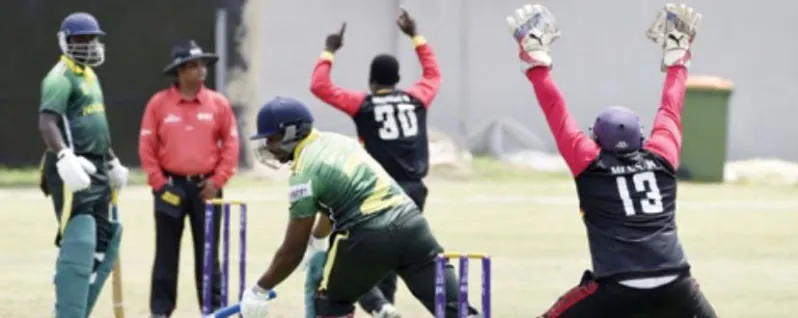
After Nigeria gained independence in 1960, 4 years after (1964), the annual matches against Sierra Leone and Gambia began because there was much interest in cricket from other African countries. These were evenly contested until the late 1970s, when football began to become more popular in Nigeria and the sports of Crickets started to decline.
Nigeria lost two of the three matches and drew the other when Tanzania toured in 1974, and this was followed by a heavy loss to the MCC in 1976. Internal problems within the cricket association and in Nigeria itself led to a decline in standards.
Even so, Nigerians formed the majority of players on the West Africa cricket team, which became an associate member of the International Cricket Council in 1976.
The West Africa team took part in the ICC Trophy tournaments of 1982 and 1997 before withdrawing from the 2001 tournament in Ontario.
Nigeria continued playing on their own occasionally although they withdrew sometimes from the tournament as they did in the 1998 Africa Cricket Association championship.
The West Africa Cricket conference stopped existing in the year 2002, and that same year, was when Nigeria finally and fully became one the associate members of the International Cricket Council in their own right.
Nigeria in the ICC
Nigeria’s first tournament as an ICC member in its own right was the 2002 Africa Cup in Zambia, where they finished fourth in their group, their only win coming against Malawi. They finished 5th in the Africa Cricket Association Championships in 2004 and so failed to qualify for the 2005 ICC Trophy.
In August 2006, Nigeria participated in Division Two of the world Crickets League African Region in Tanzania and finished last; this relegated them to a lower ranking in Division Three.
They won the North West Africa Championship in 2007 and 2008, and finished second in Division Two of the World Cricket League Africa Region in 2008 to qualify for the 2009 ICC World Cricket League Division Seven. They took 3rd place in that tournament, thus remaining in the division.
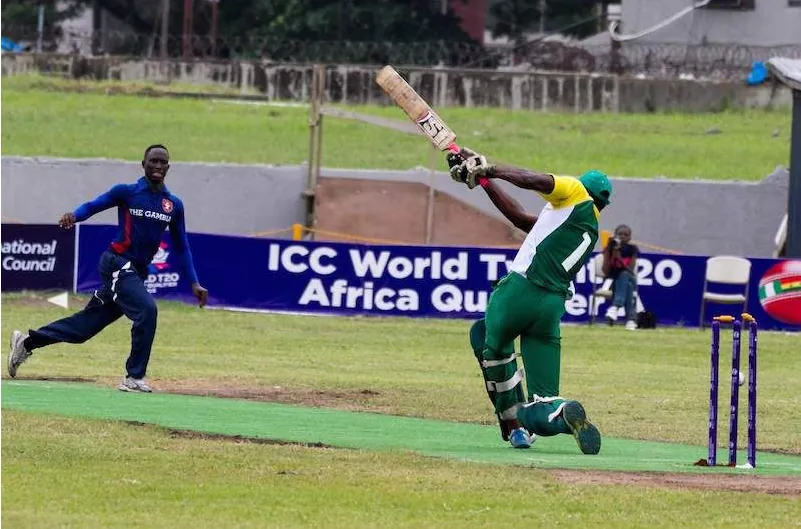
In May 2011, Nigeria took part in the ICC World Cricket League Division Seven in Botswana and finished 2nd, which qualified them for the 2011 ICC World Cricket League Division Six. The same month in South Africa they won the ICC Africa Division Two (T20) tournament, earning a place in Africa Division One on the road to the 2012 ICC World Twenty20.
Verified timeline · checked 29 September 2026
Nigerian cricket timeline
- 25 May 1904First international: Lagos Colony v Gold Coast at the Race Course (now Tafawa Balewa Square); the Gold Coast wins by 22 runs.
- 1932 and 1933Separate cricket associations are formed for Europeans and for Nigerians.
- 1957The two bodies merge as the Nigeria Cricket Association.
- 1964Annual matches against Sierra Leone and The Gambia begin.
- 1976The West Africa team, mostly Nigerian players, becomes an ICC associate member.
- 2002Nigeria becomes an ICC associate member in its own right.
- 2006The Nigeria Cricket Association is renamed the Nigeria Cricket Federation.
- 2019First men’s T20 international (v Kenya, 20 May) and first women’s T20 international (v Rwanda, Abuja, 26 January).
- 2020The boys play Nigeria’s first World Cup, the ICC Under-19 World Cup in South Africa.
- 2021Peter Aho takes 6 for 5 against Sierra Leone in Lagos, then the best figures in men’s T20I history.
- 2025The girls beat New Zealand at the ICC U19 Women’s T20 World Cup in Malaysia.
- 2026The first Nigeria Super League is played; the U19 girls qualify for the 2027 World Cup.
Advertisement
Keep reading
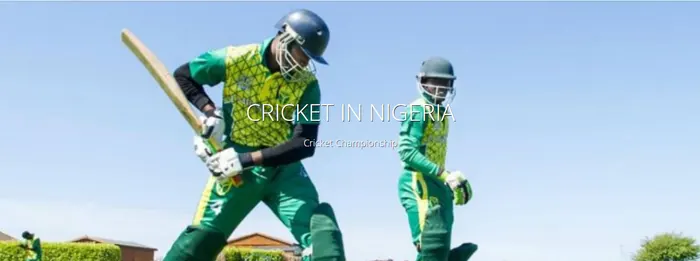
Cricket in Nigeria
The Yellow Greens, the federation and the game.Read more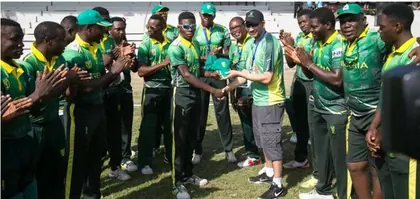
Nigeria national cricket teams
Men, women and the U19 World Cup teams.Read more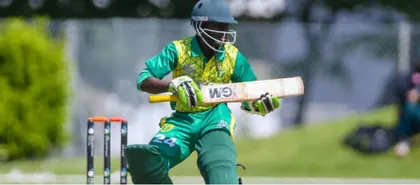
Nigeria Super League
The first franchise league, won by Middle-Belt Tigers.Read more
Nigerian cricketers
Captains, record-breakers and rising stars.Read more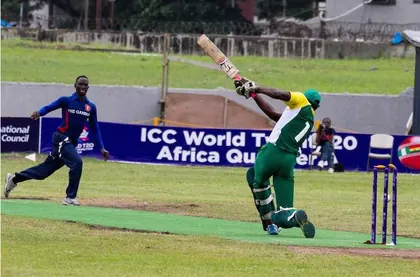
Sylvester Okpe
Captain of the Yellow Greens.Read more
Peter Aho
The bowler who took 6 for 5.Read more
Contact Nigerian cricket
The Nigeria Cricket Federation.Read more
Quick answers
History of Nigerian cricket: quick answers
When was the first cricket match in Nigeria?
The first recorded international was played on 25 May 1904 at the Race Course (now Tafawa Balewa Square), Lagos, between Lagos and the Gold Coast (now Ghana). The Gold Coast won by 22 runs.
Who brought cricket to Nigeria?
British colonial administrators introduced cricket in the 19th century, and English missionaries and army personnel helped spread it.
Why did cricket decline in Nigeria?
From the late 1970s football grew far more popular, and problems within the cricket association and in the country led to a fall in standards. The revival began after Nigeria joined the ICC in its own right in 2002.