Boxing · Careers
How to build a boxing career in Nigeria
From your first boxing club to Team Nigeria and a professional licence: every step, the rules that protect you, what boxers earn and the jobs around the ring.

Advertisement
Careers in boxing
Your road to the ring
Nigeria's very first Olympic medal was won in a boxing ring, by Nojim Maiyegun in Tokyo in 1964. Before that, Hogan “Kid” Bassey and Dick Tiger had become world champions. Today Nigerian-born and Nigerian-heritage fighters such as Efe Ajagba, Anthony Joshua and Daniel Dubois are among the biggest names in heavyweight boxing.
This page is for young Nigerians who want to box, and for the parents, teachers and coaches who worry about them, as they should. It explains how to start in a proper gym, how amateur boxers reach Team Nigeria, how the move to professional boxing works, what boxers really earn, the medical and anti-doping rules that protect you, and the careers around the ring: coach, referee, judge, ringside doctor and promoter. Every figure was checked on 1 October 2026.
One honest truth before you start: boxing is a hard and dangerous sport, and most boxers never earn much from it. Ajagba worked in a bread factory while he trained. Oto Joseph, later African champion, was an okada rider. The fighters who succeed are disciplined in and out of the gym, and they protect their health above everything.

Career facts · Checked 1 October 2026
Nigerian boxing careers in numbers
-
1964
Nigeria's first Olympic medal
Nojim Maiyegun, boxing bronze in Tokyo.
-
8
African Games golds, 2023
Nigeria topped the boxing table in Accra.
-
1949
Board of Control founded
The regulator of professional boxing.
-
₦2m
Record domestic best boxer prize
GOtv Boxing Night, Ibadan, 2017.
The pathway at a glance
Six stages from the gym to a title
Ages are a guide. Anthony Joshua only took up boxing at 18, and was Olympic champion within five years.
Age 10 to 14
Fitness and a proper gym
Start in a registered boxing club with a qualified coach: skipping, footwork, pad work and discipline before any sparring.
Age 14 to 17
Supervised amateur bouts
Medical checks, matched opponents and protective equipment. Learn to win on points, not to hurt people.
Age 15 and up
State team and National Sports Festival
State associations pick boxers for national competitions. Oto Joseph's 2012 Festival gold changed his life.
Age 17 and up
National trials and Team Nigeria
The Nigeria Boxing Federation holds trials to pick teams for the African Games, Commonwealth Games and Olympics.
Age 18 and up
Professional licence
The Nigerian Boxing Board of Control licenses professional boxers and promoters and sanctions shows.
Professionals
Titles at home and abroad
Nigerian, West African, African and Commonwealth titles can lead to world rankings and bigger purses.
Step by step
Eight steps to a boxing career
Follow these in order. Each step builds on the one before it, and your health comes first at every step.
Join a real boxing club, not a street fight
Efe Ajagba says he discovered boxing in Nigeria by fighting on the streets, but that boxing is different: when he started, coaches taught him the foundations, footwork and combinations. Find a club with a qualified coach, proper gloves, headguards and a first-aid kit. The historic home of Nigerian boxing is the Brai Ayonote Boxing Complex at the National Stadium, Surulere, Lagos, but every state has gyms.
- Visit the gym first with a parent and watch a full session.
- A good coach makes beginners do weeks of fitness and technique before any sparring.
Stay in school while you train
Boxing careers are short, and injuries can end them overnight. Keep your education or a trade going. Anthony Joshua, who spent part of his childhood at Mayflower School, Ikenne, has said his Nigerian boarding school was a good discipline. Discipline is the habit that carries a boxer from the gym to the classroom and back.
Get your medical checks
World Boxing, the international federation for Olympic-style boxing, requires a yearly medical examination by a registered doctor, a pre-competition medical certificate not older than three months, and blood tests for hepatitis B, hepatitis C and HIV. Never box without them. A coach who skips medicals is not protecting you.
Compete as an amateur, and keep a record
Amateur boxing is where you learn ring craft safely. Box in club shows, state championships and the National Sports Festival; national trials are open to club and team boxers from across the country. In 2017 the federation held open trials at the Brai Ayonote Gymnasium to pick boxers for the Gold Coast Commonwealth Games. Keep a record book of every bout, result and medical check. See the competitions on our competitions page.
Earn a place in Team Nigeria
The Nigeria Boxing Federation (NBF), a member of World Boxing and the Nigeria Olympic Committee, selects national teams. Nigerian boxers topped the boxing table at the 2023 African Games in Accra with eight gold medals, five of them won by women. Team Nigeria brings international experience, and the next African Games are in Cairo from 20 January to 7 February 2027.
Turn professional the right way
Professional boxing in Nigeria is regulated by the Nigerian Boxing Board of Control (NBBofC), founded in 1949. It licenses boxers and promoters: in May 2024, for example, it issued a promotional licence to Bullion Go-Neat Global Limited. Only fight on shows sanctioned by the Board, and only sign with a licensed promoter. The Board now stages shows in Lagos, Ibadan, Abeokuta, Benin City, Enugu, Awka, Abuja and Aba.
Build your record on the big domestic shows
GOtv Boxing Night has run since 2014, with more than 30 editions and over 270 fighters, broadcast to about 50 African countries. Fighters such as Oto Joseph, Olaide Fijabi and Rilwan Babatunde built their names there, and the best boxer of each night receives the Mojisola Ogunsanya Memorial Trophy and prize money. National, West African and African titles are the road to world rankings.
Look after your body and your money
Retire on time, keep every medical record, and save from every purse. Many champions coach, promote or run gyms after boxing. Richard Riakporhe, born to Nigerian parents in London, runs a foundation against knife crime: boxing can give back to a community long after the last fight.
Advertisement
Pay
Making a living from boxing
Boxing pay is the most unequal in sport. A few world champions earn fortunes; most Nigerian boxers earn small purses. These are the verified figures.
| Level | What we could verify | Source |
|---|---|---|
| GOtv Boxing Night best boxer | ₦1 million to Rilwan Oladosu (2021) and to Raheem Animashaun at the 31st edition | BusinessDay; ThisDay, October 2025 |
| Biggest domestic pay day | ₦2 million best boxer prize to Rilwan Babatunde at GOtv Boxing Night 11, Ibadan, March 2017 | The Guardian (Nigeria) |
| Ordinary purses | No reliable figures are published for Nigerian undercard purses | SitesNG |
| Abroad | Purses depend on the promoter, the broadcaster and the boxer's ranking; no reliable average exists | SitesNG |
Efe Ajagba worked in a bread factory and later quit to box full time, against his father's wishes, before he became a professional in the United States. Our advice: keep another income until boxing pays you reliably, and never sign a contract you have not had read by a lawyer.
Beyond fighting
Careers around the ring
A boxing show needs far more people than the two in the ring. These careers keep Nigerian boxing alive.
| Career | How to start in Nigeria | What to know |
|---|---|---|
| Coach | Assist at a registered club, then ask the Nigeria Boxing Federation which coaching courses it recognises. | Good coaches protect boxers as well as train them. |
| Referee or judge | Ask the NBF (amateur) or the Board of Control (professional) about officials' courses. | Knowledge of the rules, fitness and fairness are essential. |
| Ringside doctor or medic | Qualify in medicine or nursing, then volunteer at boxing shows. | World Boxing requires doctors at major events: at least five at continental qualifiers and six at the Olympic Games. |
| Promoter | Work for a licensed promoter, then apply to the Board of Control for your own licence. | Promoters need a Board licence; one was issued to Bullion Go-Neat Global Limited in 2024. |
| Gym owner | Coach for years first, then open a club with proper equipment and first aid. | Many former fighters run gyms. |
Women's boxing
The path for girls and women
Nigerian women are now among Africa's strongest boxers. At the 2023 African Games in Accra, five of Nigeria's eight boxing golds were won by women: Nene Ojo, Cynthia Ogunsemilore, Blessing Oraekwe, Patricia Mbata and Jacinta Umunnakwe. At Birmingham 2022, Elizabeth Oshoba won Commonwealth silver.
- The path is the same as for boys: a registered club, medical checks, state and national competitions, then national trials.
- Women box at the Olympics, the Commonwealth Games and the African Games; the 2018 Commonwealth trials selected women at 51kg, 60kg, 69kg and 75kg.
- Parents: meet the coach, watch training, and make sure a female official or chaperone travels with girls to competitions.
Stay safe
Medicals, anti-doping and safety
This section can save your health, and your career.
- Medicals first: no bout without a current medical certificate and blood tests, as World Boxing requires.
- Anti-doping: at the Paris 2024 Olympics, Cynthia Ogunsemilore was provisionally suspended after testing positive for furosemide, a diuretic that can mask other drugs. In 2026 a planned fight of Lawrence Okolie, born to Nigerian parents, was cancelled after an adverse anti-doping finding. Weight-cutting pills and “water tablets” can end a career.
- Nigeria's National Anti-Doping Act, signed in April 2025, applies the World Anti-Doping Code in Nigeria and created the Nigeria Anti-Doping Centre.
Rules that protect young boxers
- Never spar without a coach watching, headguard, gumshield and proper gloves.
- Stop at once and see a doctor after a hard knock to the head, a headache that will not go, or dizziness.
- Never take a pill, drink or injection to make weight. Check every medicine and supplement first.
- Only fight on shows sanctioned by the NBF or the Board of Control.
- Never pay anyone to “get you a fight abroad”. Real promoters pay boxers, not the other way round.
- A coach should never be alone with a child; parents should know who is training their children.
Advice from the stars
What Nigerian boxing people want you to know
Every quote below was checked word for word against the outlet named under it. We add one practical lesson to each.
Training and then working in the bread factory wasn't easy
Efe AjagbaHeavyweight born in Ughelli, 2015 African Games champion
ThisDay, 6 October 2018The lesson: Most champions worked another job first. Keep going.
Before 2014, when GOtv Boxing Night debuted, Nigerian boxing was no longer in existence; it had gone down completely.
Dr Rafiu LadipoPresident, Nigerian Boxing Board of Control
ThisDay, 4 October 2025The lesson: Regular, well-run shows are what give Nigerian boxers a career.
This license signifies hope for young Nigerians who lack sponsors to showcase their talents to the world.
Olufemi Ajadi OguntoyinboBoxing promoter, Bullion Go-Neat Global
Vanguard, 30 May 2024The lesson: Fight only for licensed promoters on sanctioned shows.
My heart is with Nigeria, my heart is with Britain. I'm a Nigerian man by blood.
Anthony JoshuaTwo-time unified world heavyweight champion, parents from Sagamu
The Guardian (Nigeria), 1 January 2020The lesson: Wherever boxing takes you, your roots can travel with you.
Your first move
Where to start this week
Whatever your age, you can start this week. Tick these off:
- Find a registered boxing club near you and watch a training session with a parent.
- Ask the coach about medical checks before you spar.
- Buy or borrow skipping rope, hand wraps and a gumshield.
- Train your fitness and footwork every day; sparring comes later.
- Keep up your school work or trade.
- Keep a record book of every bout and medical.
- Parents and coaches: contact the Nigeria Boxing Federation or the Board of Control for official programmes.
Find both organisations on our Contact Nigerian boxing page, and follow Nigerian fighters every week on our Pro Tracker.
Keep exploring
Explore Nigerian boxing
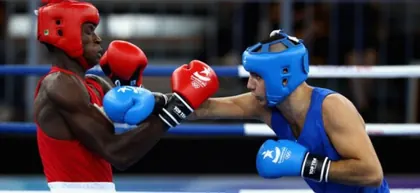
Boxing competitions
Olympic, Commonwealth and All-Africa medals.Read more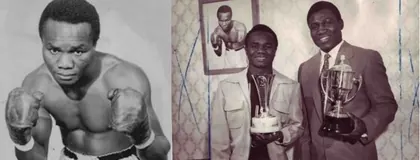
Nigerian boxing Hall of Fame
Twelve fighters who carried the green and white.Read more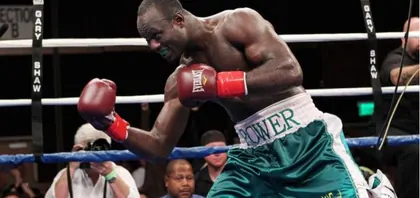
Pro Tracker
Weekly results of Nigerian and Nigerian-heritage professionals.Read more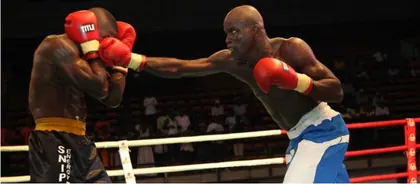
Nigerian boxers
Profiles of Nigeria's greatest fighters, past and present.Read more


Quick answers
Boxing careers in Nigeria: your questions
How do I become a professional boxer in Nigeria?
Start in a registered amateur club, gain experience in amateur bouts and national competitions, then apply for a professional licence from the Nigerian Boxing Board of Control, which licenses boxers and promoters and sanctions professional shows.
What is the difference between the NBF and the Board of Control?
The Nigeria Boxing Federation runs amateur, Olympic-style boxing and selects Team Nigeria. The Nigerian Boxing Board of Control, founded in 1949, licenses and regulates professional boxing.
How much do boxers earn in Nigeria?
No reliable figures are published for ordinary purses. The best boxer at GOtv Boxing Night has received ₦1 million, and the record domestic best boxer prize was ₦2 million to Rilwan Babatunde in 2017.
What medical tests does a boxer need?
World Boxing requires a yearly medical examination by a registered doctor, a pre-competition medical certificate not older than three months, and blood tests for hepatitis B, hepatitis C and HIV.
Can girls box in Nigeria?
Yes. Nigerian women won five of the country's eight boxing golds at the 2023 African Games, and Elizabeth Oshoba won Commonwealth silver in 2022. Girls follow the same club, state and national trials path as boys.
What jobs are there in boxing apart from fighting?
Coach, referee or judge, ringside doctor or medic, licensed promoter, and gym owner. Ask the Nigeria Boxing Federation or the Board of Control about recognised courses and licences.
Is Anthony Joshua Nigerian?
Anthony Joshua was born in Watford, England, to Nigerian parents who both grew up in Sagamu, Ogun State, and he spent part of his childhood at Mayflower School, Ikenne. He took up boxing at 18 and won Olympic gold in 2012.