Badminton · Careers
How to build a badminton career in Nigeria
From school courts to Team Nigeria and the Paralympics: every step, the money that really exists, and advice from Opeyori and Bolaji.
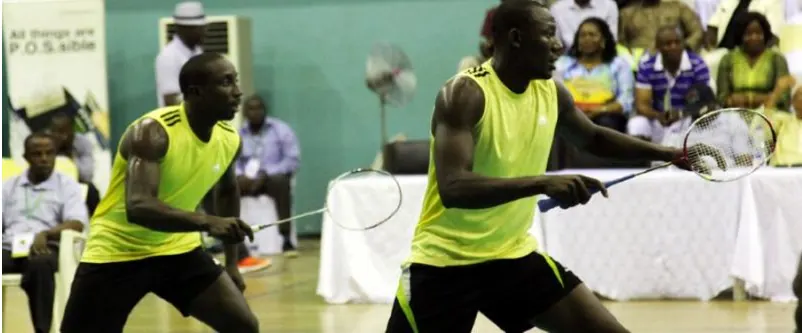
Advertisement
Careers in badminton
Your road into Nigerian badminton
Badminton is one of Nigeria's fastest growing sports, and Nigerians are winning in it. Anuoluwapo Juwon Opeyori won five African men's singles titles in a row and played at two Olympic Games. Mariam Eniola Bolaji won Africa's first Paralympic badminton medal in Paris and became world No. 1 in her class in 2026. Every August, the Lagos International Badminton Classics brings players from dozens of countries to the National Stadium.
This page is for young players, parents, PE teachers and future coaches and umpires. It explains how to start, how the pathway from school courts to the national team works, how para-badminton opens doors, what money exists in the sport, and the qualifications for coaching and officiating. Everything was checked on 1 October 2026.
The honest truth: badminton in Nigeria is still mostly an amateur sport. Even Opeyori has said funding, equipment, infrastructure, coaching and exposure are the big challenges for Nigerian players. But the pathway is real, the federation is active, and Nigeria is one of Africa's strongest badminton nations. If you are patient and disciplined, there is a place for you.
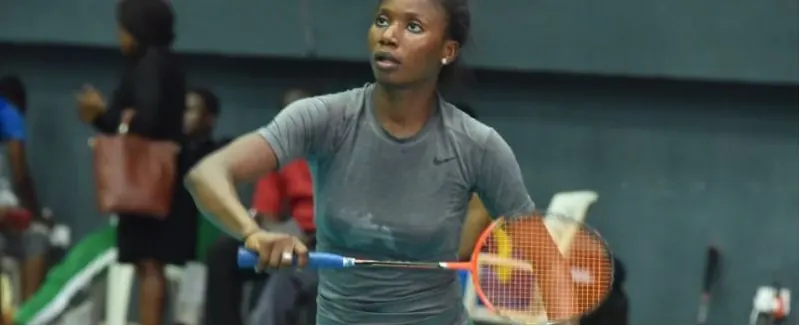
Career facts · Checked 1 October 2026
Nigerian badminton careers in numbers
-
5
African singles titles
Opeyori, men's singles, 2019 to 2025.
-
No. 1
World para ranking
Bolaji, women's SL3, 2026.
-
$20k
Lagos Classics prize money
Total prize fund at the 2026 edition.
-
166
Players in Lagos 2026
From 27 countries, at Nigeria's own BWF event.
The pathway at a glance
Six stages from school court to Team Nigeria
Ages are a guide. Para players and late starters follow the same pathway at their own pace.
Age 6 to 12
School and Shuttle Time
Learn the basics in PE lessons. Shuttle Time is the Badminton World Federation's schools programme, and its teachers and tutors have been trained in Nigeria.
Age 10 to 16
Join a club or state association
Clubs and state associations such as the Lagos State Badminton Association at Rowe Park, Yaba, give regular coaching and tournaments.
Age 13 to 18
State and national championships
The BFN planned at least four national championships in 2026. These are where national coaches look.
Age 15 and up
International events at home
The Lagos International Classics, a BWF International Challenge, lets Nigerians earn world ranking points without leaving the country.
Age 17 and up
National team
African Championships, the African Games (Cairo 2027) and the Olympic and Paralympic qualification races.
Any age
Coach, umpire or teacher
BWF coach education and national umpire courses turn experience into a career.
Step by step
Seven steps to a badminton career
Follow these in order. Each step builds on the one before it.
Learn the basics properly, and be patient
Badminton looks simple in the backyard, but competition badminton is built on footwork, grip and patience. Opeyori's first advice to beginners is to master the basics, such as footwork, the clear and the drop shot, before anything fancy. Racquets weigh only 70 to 95 grams, so a beginner's kit is light: a racquet, shuttles and proper indoor court shoes.
- Play several times a week with a coach watching your footwork.
- Do not rush into advanced shots: master the clear and the drop first.
Join a club and your state association
Nigeria's best players came through clubs and state associations. The Lagos State Badminton Association, set up in 2014 through the Lagos State Sports Council, trains players at the Rowe Park Sports Centre, 208 Herbert Macaulay Way, Yaba. In other states, ask your state sports council or the Badminton Federation of Nigeria (BFN) where the nearest club trains.
Play the national championships
No national championship was held in 2025, but the BFN planned at least four in 2026. Enter every one you can. Results at national events are how a young player gets noticed by the national team coaches, and they give you a record of wins against ranked opponents.
Use the international events Nigeria hosts
The Lagos International Badminton Classics was first held in 2014 and is graded by the BWF as an International Challenge, which means world ranking points. In 2014 Nigerians won the women's doubles (Dorcas Ajoke Adesokan and Maria Braimoh) and the mixed doubles (Enejoh Abah and Tosin Atolagbe). The 9th edition, from 26 to 29 August 2026, drew 166 players from 27 countries. For a Nigerian player, it is the cheapest way to test yourself against the world.
Earn your place in Team Nigeria
Nigeria has won the African mixed team title four times (1980, 1982, 1988 and 2019) and the African Games mixed team gold in 2007, 2011 and 2019. At the 2023 African Games in Accra, Nigeria finished second on the badminton medal table. The next African Games are in Cairo, Egypt, from 20 January to 7 February 2027. Consistent results at home and on the African circuit are what earn a call-up.
Chase world ranking points
Olympic and Paralympic places depend on world ranking points, earned at BWF-sanctioned tournaments. Opeyori reached a career-high 86th in men's singles in 2023 and qualified for both Tokyo 2020 and Paris 2024, carrying Nigeria's flag at the Paris opening ceremony. Travel to ranking events costs money, which is why the next section on funding matters.
Keep learning, and add a qualification
A badminton career can last long after your playing days if you add coaching or umpiring badges. Start early: help with junior sessions at your club, ask the BFN about courses, and read the section on careers around the court below.
Advertisement
Para sport
Para-badminton: Nigeria's world-class pathway
Nigeria's greatest badminton success story right now is in para-badminton, and it is a genuine career pathway for players with a physical impairment.
- Mariam Eniola Bolaji won bronze in women's singles SL3 at the Paris 2024 Paralympics, the first Olympic or Paralympic badminton medal for any African country. In February 2026 she won world silver in Bahrain and rose to world No. 1 in SL3.
- Chigozie Jeremiah Nnanna won world bronze in SL4 in 2026, and Nigeria won 6 of the 10 titles at the 2026 Uganda Para Badminton International.
- Nigeria topped the 2025 All Africa Para Badminton Championships at home in Umuahia, Abia State, with 36 medals.
Para-badminton uses classification: players are grouped by how their impairment affects play. SL3, Bolaji's class, is a standing class for players with lower-limb impairments, played on a half-width court. Talk to the BFN about classification before you plan international events, and read our Paralympics section for the wider para pathway.
Money
Making a living from badminton
Most Nigerian badminton players do not earn a salary from the sport. These are the figures and deals we could verify.
| Source of money | What we could verify | Source |
|---|---|---|
| Prize money at home | US$20,000 in total prize money at the 2026 Lagos International Badminton Classics, shared across all events | SitesNG competitions page |
| Corporate sponsorship | GIG Logistics sponsors Eniola Bolaji for four years up to the LA 2028 Paralympics, covering travel, logistics, equipment and kits for at least three major championships a year | ThisDay, August 2025 |
| Government support | The National Sports Commission and the Abia State Government were credited with supporting Bolaji's competitions in 2026 | Vanguard, February 2026 |
| Salaries | No reliable figure is published for what Nigerian badminton players earn | SitesNG |
What this means for you: the realistic plan is education plus badminton, funded by family, club, state and federation support at first. Results bring sponsors: Bolaji's deal came after a Paralympic medal. Keep a clean record of your results and rankings, because that is what a sponsor will ask to see.
Beyond playing
Careers around the court
Nigerian badminton needs coaches, PE teachers and umpires just as much as players. These careers can start while you are still playing.
| Career | How to start in Nigeria | Next level |
|---|---|---|
| Schools teacher or tutor | BWF's Shuttle Time schools programme. A course in Abuja in November 2019 trained 11 tutors and 16 teachers from different Nigerian states. | Running school badminton clubs and training other teachers. |
| Coach | Ask the BFN about BWF coach education. Level 1 covers fundamental skills and coaching principles for new coaches. | Level 2 is for coaches running year-long programmes; Level 3 is for talent development and elite coaching. |
| Umpire | National federations train and assess umpires up to the national level for their top tournaments. Start at your state association. | Continental accreditation and certification through Badminton Confederation of Africa courses, then BWF Umpire, the highest level. |
| Administrator | Volunteer at club and state events, and at the Lagos International Classics. | State association and federation roles. BFN president Francis Orbih joined the BWF Council in 2025. |
Shuttle Time training in Abuja also introduced AirBadminton, a BWF project designed to spread the game across Africa and make up for the lack of indoor halls in many countries. It is a useful tool for any teacher in a school without a sports hall.
Women's badminton
Girls and women in badminton
Nigerian women have a proud badminton record, and the pathway is the same as for boys: school, club, state association, national championships, then Team Nigeria.
- Oby Edoga-Solaja was one of Nigeria's first two Olympic badminton players in 1996.
- Grace Daniel won women's singles gold at the 2003 All-Africa Games in Abuja.
- Dorcas Ajoke Adesokan was African women's singles and doubles champion in 2019 and played at Tokyo 2020, reaching a career-high 77th in the world.
- Mariam Eniola Bolaji is a Paralympic medallist and world No. 1.
- Rising players include Sofiat Obanishola, African Games doubles bronze medallist in 2023.
Parents: badminton is an indoor, non-contact sport that can be played for life. Ask any club how it supervises young players and who its coaches are.
Stay safe
Anti-doping, injuries and warning signs
Three things protect a young badminton player's career.
Anti-doping
President Bola Tinubu signed Nigeria's National Anti-Doping Act in April 2025. It created the Nigeria Anti-Doping Centre to apply the World Anti-Doping Code, with testing in and out of competition. Once you play international events, you can be tested. Never take a supplement or medicine without checking it first, and tell every doctor that you are a competitive athlete.
Injury prevention
Badminton is a fast game of sudden lunges and jumps. Proper court shoes, a coach who checks your footwork, and warming up before every session are not optional extras.
Warning signs to watch for
- Anyone who asks for money to “guarantee” a place in a national team or a foreign tournament. Selection is by results.
- Tournaments abroad that you cannot find on the BWF calendar or confirm with the BFN.
- “Sponsorship” offers that ask the player to pay first.
- Coaches who will not let parents watch training sessions.
What to do: confirm any invitation with the Badminton Federation of Nigeria before you pay or travel.
Advice from the stars
What Nigerian badminton stars want you to know
Every quote below was checked word for word against the outlet named under it. We add one practical lesson to each.
Learning badminton requires patience because it is not a sport that can be mastered hurriedly.
Anuoluwapo Juwon OpeyoriFive-time African champion and two-time Olympian
Daily Asset, 12 March 2026The lesson: Master the basics first: there are no shortcuts on a badminton court.
I have been able to overcome these challenges by focusing on what I can control.
Anuoluwapo Juwon OpeyoriOn the funding and facility problems Nigerian players face
Daily Asset, 12 March 2026The lesson: You cannot control funding, but you can control your training and attitude.
I am very happy and motivated by this massive sponsorship going into upcoming major championships.
Mariam Eniola BolajiParalympic bronze medallist and para-badminton world No. 1
ThisDay, 22 August 2025The lesson: Results bring sponsors: build your record first.
This collaboration goes far beyond financial support; it represents belief, trust, and an investment in excellence.
Francis OrbihPresident, Badminton Federation of Nigeria
ThisDay, 22 August 2025The lesson: A sponsor is a partner who believes in you: repay that trust with professionalism.
Your first move
Where to start this week
You can start this week. Tick these off:
- Find a club or your state badminton association and ask to train.
- Get proper indoor court shoes before buying an expensive racquet.
- Practise footwork for ten minutes every session.
- Ask your PE teacher whether your school has a Shuttle Time trained teacher.
- Enter your state and national championships.
- Watch the Lagos International Classics every August and learn from the best.
- Players with an impairment: ask the BFN about para-badminton classification.
- Adults: ask the BFN about the next coaching or umpiring course.
The federation's contacts are on our Contact Nigerian badminton page, and you can follow Nigerian results every week on the World Tour Tracker.
Keep exploring
Explore Nigerian badminton
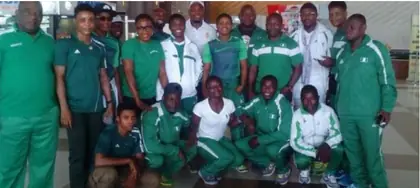
Nigeria's national badminton team
African titles, Olympic appearances and Paralympic medals.Read more
Badminton competitions
The Lagos Classics, African Championships and the 2026 calendar.Read more
Mariam Eniola Bolaji
Paralympic medallist and world No. 1 in para-badminton.Read more
Contact Nigerian badminton
The BFN and the Lagos State association.Read more
Quick answers
Badminton careers in Nigeria: your questions
How do I start playing badminton in Nigeria?
Join a club or your state badminton association. In Lagos, the Lagos State Badminton Association trains at the Rowe Park Sports Centre in Yaba. In other states, contact the Badminton Federation of Nigeria (BFN), which is based at the National Stadium, Package B, Abuja.
Can you make a living from badminton in Nigeria?
Very few players can. No salary figures are published, and most players are amateurs supported by family, clubs, states and the federation. Top players attract sponsorship: Eniola Bolaji has a four-year deal with GIG Logistics up to the LA 2028 Paralympics.
How do Nigerian players qualify for the Olympics in badminton?
Through world ranking points earned at BWF-sanctioned tournaments. Anuoluwapo Opeyori qualified for Tokyo 2020 in doubles and for Paris 2024 in singles. The Lagos International Classics, a BWF International Challenge, offers ranking points at home.
What is para-badminton and does Nigeria compete?
Para-badminton is badminton for players with physical impairments, grouped into classes such as SL3. Nigeria is Africa's leading nation: Mariam Eniola Bolaji won Paralympic bronze in 2024 and world silver in 2026, and Nigeria topped the 2025 All Africa Para Championships with 36 medals.
How do I become a badminton coach in Nigeria?
Ask the BFN about Badminton World Federation coach education. Level 1 covers fundamental skills and coaching principles, Level 2 is for coaches running year-long programmes and Level 3 is for talent development and elite coaching. Teachers can also train through the BWF Shuttle Time schools programme.
How do I become a badminton umpire?
Start with your state association and the BFN, which train and assess umpires up to national level. Experienced umpires can then gain continental accreditation through the Badminton Confederation of Africa and, at the top, become BWF Umpires.
When is the next big badminton event for Nigeria?
The African Games in Cairo, Egypt, from 20 January to 7 February 2027, and the Lagos International Badminton Classics, held every August at the National Stadium in Lagos.